
-300x210.jpg)
Your Pipes Are Under Attack by Biofilm — Are You Protected?
Your pipes look clean from the outside. But inside, bacteria are building colonies right now. And most pipe systems have no real defense against it.
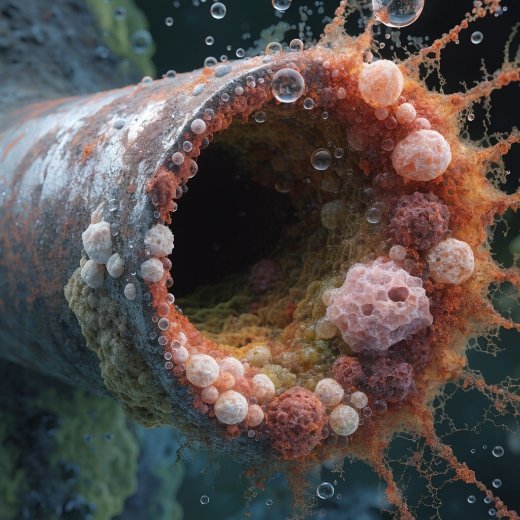
Biofilm is a thin layer of bacteria that sticks to the inner walls of pipes. It grows silently, resists standard cleaning, and causes corrosion from within. The most effective protection is building antimicrobial properties directly into the pipe material itself.
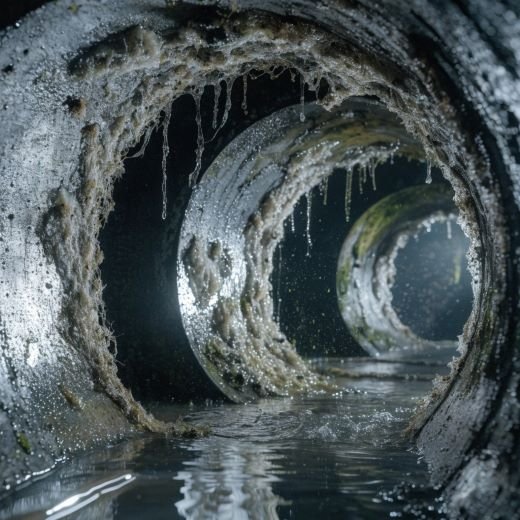
I have spoken with many plant managers who were shocked to learn the real source of their pipe failures. They had been running cleaning cycles for years. But the problem was never on the surface. It was locked inside a biofilm layer that no chemical flush could fully reach. If you manage any kind of fluid system, this is something you need to understand before it costs you.
Biofilm: The Invisible Enemy Hiding in Your Pipes?
Most pipe damage starts small. A few bacteria land on a wet surface. They multiply. Then they build a shield. By the time you notice the damage, it is already serious.
Biofilm is a structured community of bacteria protected by a self-made coating called a matrix. This matrix makes biofilm up to 1,000 times more resistant to disinfectants than free-floating bacteria. It attaches firmly to pipe walls and is nearly impossible to remove with standard cleaning methods.
How Does Biofilm Actually Form?
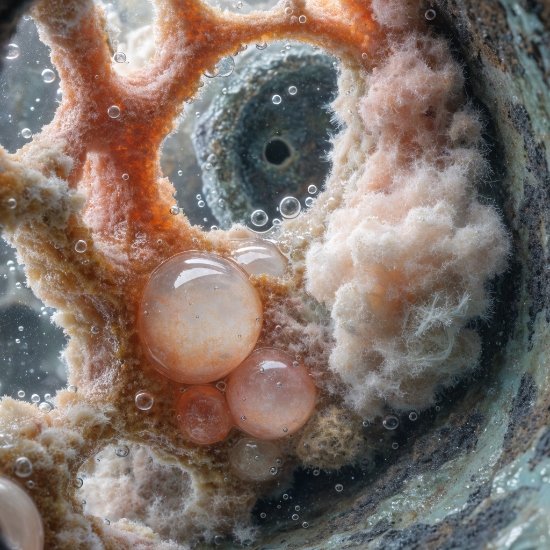
Biofilm is not just a layer of slime. It is a living system. The bacteria inside it communicate, share nutrients, and protect each other from outside threats. Once it is established, it becomes almost self-sustaining.
Here is how biofilm builds up, step by step:
| Stage | What Happens | Typical Time Frame |
|---|---|---|
| Attachment | Free bacteria land on the pipe surface | Within hours |
| Colonization | Bacteria multiply and anchor themselves | 1–3 days |
| Matrix formation | Bacteria produce a protective slime layer | 3–7 days |
| Maturity | Full biofilm structure is established | 1–3 weeks |
| Dispersal | Bacteria spread to new areas inside the pipe | Ongoing |
I once visited a food processing plant where the team had followed every standard cleaning protocol by the book. Their pipes still tested positive for bacterial contamination. The reason was simple. Their cleaning could reach the pipe surface, but biofilm had already built deep into the wall. Standard disinfectants could not break through the matrix.
The pipes that suffer the most are those carrying warm water, nutrient-rich fluids, or anything with slow flow rates. These are ideal conditions for biofilm to grow fast and grow thick. If your system checks any of those boxes, your risk level is already high.
How to Prevent Microbiologically Influenced Corrosion?
You run flushing cycles. You dose your water with chemicals. But the corrosion keeps coming back. The problem is not your cleaning process. The problem is that you are treating the result, not the cause.
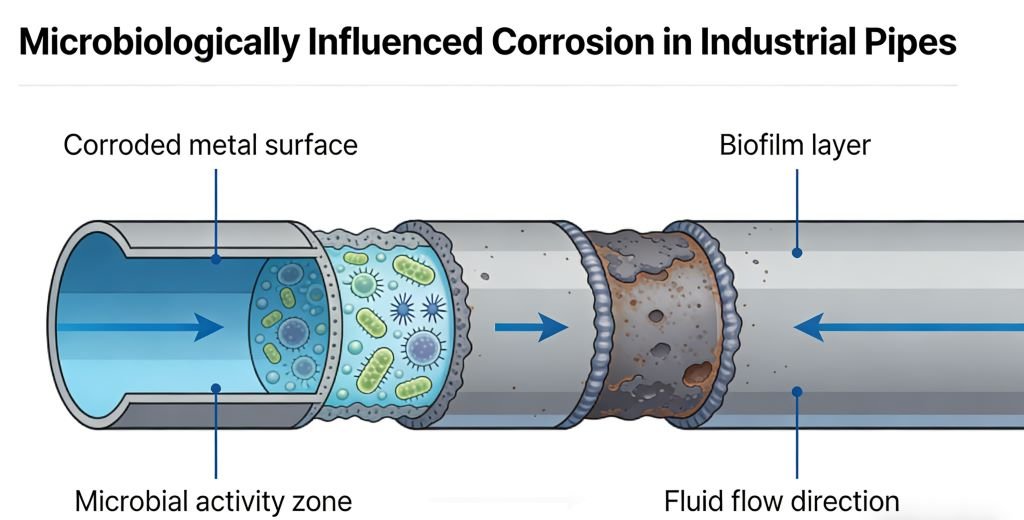
Microbiologically influenced corrosion, or MIC, happens when bacteria inside biofilm produce acids, sulfides, and other byproducts. These byproducts eat through metal and break down plastic pipe linings from the inside out. Stopping MIC means stopping biofilm before it ever starts.
Why Standard Cleaning Falls Short
Most maintenance teams rely on flushing, chemical dosing, or UV treatment. These methods work on free-floating bacteria in the water. But they are not built to handle biofilm. Here is a direct comparison:
| Method | Works on Free Bacteria | Works on Biofilm | Provides Long-Term Protection |
|---|---|---|---|
| Chemical flushing | Yes | Partial | No |
| UV treatment | Yes | No | No |
| Mechanical scrubbing | Yes | Partial | No |
| Antimicrobial pipe material | Yes | Yes | Yes |
What Does Real Prevention Look Like?
Real prevention starts at the material level. When the pipe material itself carries antimicrobial properties, bacteria cannot attach and form colonies in the first place. There is no biofilm matrix. There is no corrosion cycle. The pipe stays clean without relying on constant human intervention.
This idea is well-established in material science. But it is still widely underused in industrial pipe systems. Most buyers still choose standard pipe compounds and then spend heavily on maintenance year after year.
Preventing pipeline corrosion by microorganisms from the material itself is always cheaper than treating it after the fact. I believe this strongly, and the data supports it. When MIC takes hold, the costs include pipe replacement, system downtime, product contamination, and in some cases, full facility shutdowns. A plant that waits until corrosion is visible will spend five to ten times more on repairs than one that chose the right material from the start.
How Inorganic Antimicrobial Additives Keep Bacteria Out — From the Inside?
You have tried surface coatings. You have tried water treatment programs. But the bacteria keep coming back. The answer is not on the outside of the pipe. It is inside the material itself.
Inorganic antimicrobial additives are blended directly into pipe compounds during manufacturing. They release metal ions — silver, zinc, or copper — slowly and continuously over time. These ions stop bacteria from attaching, growing, and forming biofilm at the point of contact.
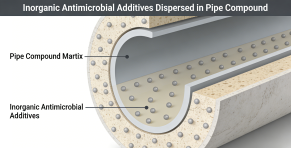
How Do These Additives Actually Work?
Unlike surface coatings that wear off or wash away, inorganic antimicrobial additives are part of the pipe material itself. They do not degrade under heat. They do not leach out quickly. And they work for the full life of the product.
Here is how inorganic and organic antimicrobial agents compare side by side:
| Property | Organic Antimicrobial Agents | Inorganic Antimicrobial Additives |
|---|---|---|
| Heat resistance | Low — degrades above 200°C | High — stable above 600°C |
| Durability | Short-term | Long-term, 2+ years |
| Resistance to leaching | Low | High |
| Suitable for food contact use | Limited | Yes, with certification |
| Effective against biofilm | Partial | Yes |
Silver, Zinc, and Copper — Which Ion Is Right for Your Application?
Each ion type has its own strengths. Silver ions work against the widest range of bacteria and are the most powerful overall. Zinc ions offer strong stability and a lower cost point, making them a practical choice for large-scale pipe production. Copper ions are especially effective against specific bacteria commonly found in water supply systems.
At Langyi, we load these ions onto a zirconium phosphate or glass carrier before blending them into the pipe compound. This carrier system controls how fast the ions are released. The release is slow and consistent, not all at once. This gives the pipe material lasting antimicrobial protection without changing its mechanical properties or processing behavior.
What This Means for Industrial Buyers
For buyers sourcing pipe materials or additives for pipe production, this approach changes the cost model. Instead of budgeting for repeated cleaning cycles and early pipe replacement, you invest once in the right material specification. The pipe protects itself. And your total maintenance cost drops over time.
I have seen this work in real customer applications. Plants that switched to pipe compounds containing AntibacMax® inorganic antimicrobial additives reported clear reductions in biofilm-related maintenance issues within the first year of use. The protection is built in. It does not depend on operator behavior or cleaning schedules.
Conclusion
Biofilm is a real, costly, and fully preventable problem. The smartest solution is built into the material itself. Protect your pipes before the damage starts.
I'm part of the team at Langyi — China's leading functional additives manufacturer. Langyi was founded by Dr. Tang, a material scientist from Tsinghua University, with one mission: to become a hidden champion in our segment through deep expertise and practical solutions. We don't just sell additives. We help you solve real material problems.