
-300x210.jpg)
Picked the Wrong Antimicrobial? Here's What It's Costing Your Polymer Product?
You've invested time and money in an antimicrobial, but your polymer products still fail. This ongoing problem frustrates you, hurting your brand and your budget.
Choosing the wrong antimicrobial can cost you dearly. It leads to product recalls, customer complaints, and lost revenue. Selecting the right additive from the start saves you significant remediation costs and protects your brand's reputation.
I've seen many companies struggle with this issue. They thought any antimicrobial would work. But the truth is, the world of functional additives is complex. Making the right choice upfront saves you many headaches down the line. Let's explore the hidden costs of a bad antimicrobial choice.
You Added an Antimicrobial. So Why Is the Problem Still There?
Your polymer product still shows microbial growth despite adding an antimicrobial. This persistent problem wastes resources and creates frustration.
The problem often remains because the chosen antimicrobial does not suit the polymer's specific application or environmental conditions. It might lack stability, leaching out too quickly, or target the wrong microbial species.
I once had a customer, they had incorporated an organic antimicrobial into their shower curtain liners. They expected lasting protection. But after a few months, black mold appeared. This situation caused customer complaints and returns. We investigated the problem.
- Environmental Factors: The high humidity in bathrooms accelerated the organic antimicrobial's degradation. It also promoted rapid microbial growth.
- Antimicrobial Stability: The organic compound broke down quickly. It lost its effectiveness. This left the polymer vulnerable.
- Microbial Resistance: The specific mold strains in the bathroom might have developed resistance. Or the antimicrobial did not target them effectively.
| Problem Area | Explanation | Impact |
|---|---|---|
| Leaching and Degradation | Many organic antimicrobials are not heat stable. They leach out over time. UV light also breaks them down. | The additive leaves the polymer. Protection ends quickly. |
| Narrow Spectrum | Some antimicrobials only kill certain types of microbes. They leave others to grow. | The product becomes vulnerable to other harmful organisms. |
| Compatibility Issues | The antimicrobial might not mix well with the polymer. It can affect the product's strength or appearance. | Product quality suffers. The additive becomes less effective. |
| Dosing Errors | Too little additive means no protection. Too much wastes money. It can also hurt product properties. | Ineffective protection or wasted resources. |
| Misunderstanding Application | Different products need different protection. A medical device needs more robust protection than a toy. | The antimicrobial fails to meet required performance levels. |
This experience taught me a vital lesson. A "one-size-fits-all" approach to antimicrobials rarely works. It often leads to ongoing problems and significant costs. Understanding the polymer's use environment and the specific microbial threats is key.
Three Ways Organic Antimicrobials Let Your Polymer Product Down?
Organic antimicrobials often seem like an easy fix. But they frequently lead to problems. This can cost you more in the long run.
They often fail due to poor stability, narrow activity, and easy leaching. These weaknesses make them unreliable for long-term polymer protection.

Many used organic antimicrobials. They liked the lower initial cost. But then they called me later with persistent issues. I saw how these choices created more problems than they solved.
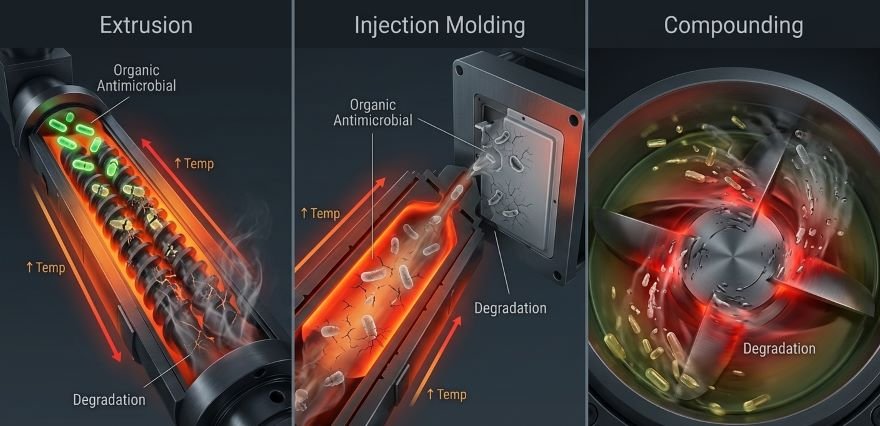
- Poor Thermal Stability: Organic antimicrobials are often sensitive to high temperatures. Polymer processing involves heat. This heat can degrade the antimicrobial. Its effectiveness drops before the product even leaves the factory. This means the product has little to no protection.
- Susceptibility to Leaching: Many organic compounds are water-soluble. Or they can easily migrate out of the polymer matrix. When exposed to moisture or cleaning, the active ingredient washes away. This leaves the polymer vulnerable. This reduces the product's lifespan.
- Narrow Antimicrobial Spectrum: Some organic antimicrobials target only specific bacteria or fungi. They might not protect against a broad range of microbes. If the product encounters a different microbe, it will not be protected. This leads to unexpected growth and product failure.
This often leads to a cycle of complaints and remediation. I remember one customer who made cutting boards. They used an organic antimicrobial. Customers complained about mold after a few months. The high-use and wash cycles quickly removed the organic additive. This meant the antimicrobial effect was short-lived. We worked to find a more robust solution for them. This incident showed the true cost of choosing an organic antimicrobial. It often means replacing products and losing customer trust.
Why More Polymer Manufacturers Are Switching to Inorganic Antimicrobials?
Many polymer manufacturers are moving away from organic antimicrobials. They are choosing inorganic ones instead. This shift reflects a growing understanding of performance and cost.
Inorganic antimicrobials offer superior durability, broad-spectrum activity, and thermal stability. These properties provide more reliable and long-lasting protection for polymer products.

When we discuss antimicrobial solutions with clients at Langyi, we always highlight the long-term benefits of inorganic options. Dr. Tang, our founder, emphasized the science behind this. He believed in solutions that offer sustained performance. This focus on durability and effectiveness is why we champion inorganic additives.
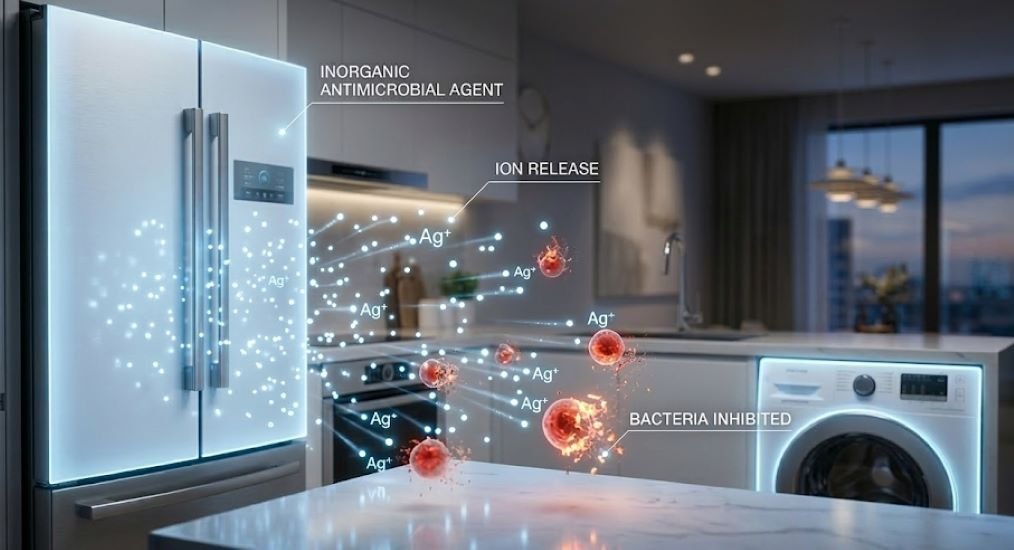
- Exceptional Thermal Stability: Inorganic antimicrobials, like silver-based compounds, can withstand high processing temperatures. They do not degrade during extrusion or injection molding. This means the antimicrobial is fully active in the final product.
- Broad-Spectrum Efficacy: These additives often target a wider range of bacteria, fungi, and even some viruses. This broad action provides more comprehensive protection. It simplifies the selection process. It gives greater peace of mind for varied product applications.
- Non-Leaching and Durability: Inorganic particles are typically embedded within the polymer matrix. They do not easily leach out. This provides long-lasting protection. The antimicrobial effect remains for the product's entire lifespan. This reduces the need for constant reapplication. It also improves product safety.
| Feature | Organic Antimicrobials | Inorganic Antimicrobials |
|---|---|---|
| Thermal Stability | Poor; degrades at high temperatures | Excellent; withstands high processing temperatures |
| Leaching | Prone to leaching; washes out over time | Non-leaching; embedded in matrix |
| Spectrum | Often narrow; targets specific microbes | Broad-spectrum; effective against many microbes |
| Durability | Short-lived; protection fades quickly | Long-lasting; protection for product's lifetime |
| Cost (Initial) | Lower | Higher |
| Cost (Lifetime) | Higher due to replacements, callbacks, reputation | Lower due to sustained performance, fewer issues |
| Safety | Some concerns about toxicity or environmental fate | Generally recognized as safer; less environmental impact |
This move to inorganic antimicrobials is not just about performance. It's about total cost of ownership. While the initial cost may be slightly higher, the savings from avoiding product failures and customer dissatisfaction are huge. This approach aligns with our mission at Langyi: to provide professional solutions that make our customers hidden champions in their segments.
Conclusion
Choosing the right antimicrobial is critical. Organic options often lead to hidden costs and product failures. Inorganic additives provide durable, broad-spectrum protection, saving you time and money.When I was first starting out, I observed a client facing this exact issue.