
Does Your Smart Home Actually Fight Back Against Bacteria?
Your home looks clean. But bacteria live on every surface you touch. Smart homes are getting smarter. Now they need to get safer.
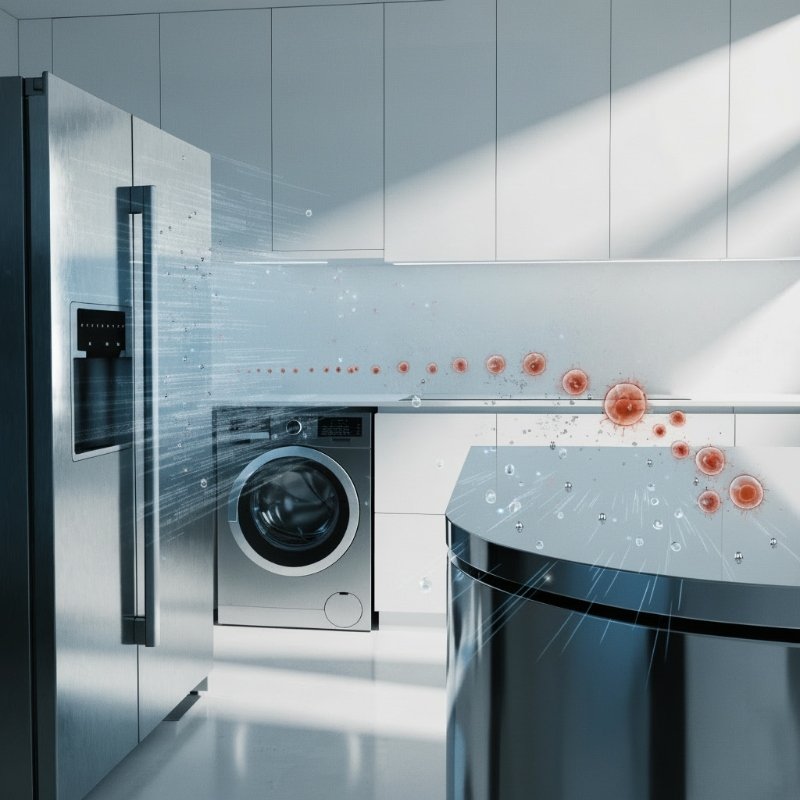
Smart homes fight bacteria by using antimicrobial surfaces built into appliances. These surfaces contain inorganic antimicrobial agents. These agents stop bacteria from growing on contact. They work all the time. They do not wear off. The result is a home that protects you without any extra work from you.
 | Recontaminated quickly | Ion activity reduces bacterial load |
| After illness in the home | High risk of surface spread | Lower risk of recontamination |
| Long periods without use | Bacteria build up fast | Surface stays more hygienic |
Who This Matters For Most
For most homes, this difference is meaningful. But for homes with children, elderly people, or anyone with a weaker immune system, it matters much more. These groups face a higher risk from bacteria on everyday surfaces. They benefit the most from a surface that does not just wait to be cleaned.
At Langyi, I have watched this play out with our customers over and over. When manufacturers add antimicrobial function to their materials, the product they bring to market is different. Not just cleaner-looking. Actively protective. It works for the user in a way a standard product simply cannot.
Powered by Inorganic Antimicrobial Technology — What Makes It Built to Last and Built to Protect?
You have seen the word "antimicrobial" on sprays and packaging. But built-in antimicrobial technology is different. What makes inorganic agents the right choice for long-lasting products?
Inorganic antimicrobial agents last longer than organic ones. They are not easy to decompose at high temperature. They stay stable through the manufacturing process. And they keep working for the full life of the product. This makes them the right material choice for appliances, surfaces, and any product that needs long-term protection.
I want to explain clearly why inorganic is the better choice here. There are two main types of antimicrobial agents used in materials: organic and inorganic. Organic agents come from carbon-based compounds. They can work well in the short term. But they break down. Heat, UV exposure, and time all reduce how well they perform. For a product that needs to last 5 to 10 years, this is a real and serious problem.
Organic vs. Inorganic: A Side-by-Side Look
| Feature | Organic Antimicrobial Agent | Inorganic Antimicrobial Agent |
|---|---|---|
| Heat stability | Low to medium | High |
| Useful product lifespan | 1–3 years | 5–10+ years |
| Works with manufacturing | Limited processes | Works with most processes |
| Safety record | Varies by compound | Well-documented |
| Active ingredient | Carbon-based compound | Metal ion (Ag, Zn, Cu) |
How Langyi Puts This Into Practice
At Langyi, our inorganic antimicrobial additives are designed to be mixed into plastics, ceramics, coatings, and fibers during production. They do not change how a product looks. They do not change how it feels. But they change what the surface does every day for the rest of that product's life.
Langyi was founded by Dr. Tang, a material scientist who graduated from Tsinghua University. For us, that job is protection. We work directly with manufacturers to find the right additive for their specific material and process. We do not just sell a product. We help our customers build real protection into everything they make. This is what we mean at Langyi when we say: built to last, built to protect.
Health is the new smart. The next appliance will not just be connected — it will be protective. That protection starts at the material level, with inorganic antimicrobial technology.