
-300x210.jpg)
How Are Antimicrobial Plastics Transforming Pet Bowls and Litter Boxes?
Pet bowls and litter boxes get dirty very fast. Moisture, food residue, and waste allow bacteria and odor to build up quickly. Many pet owners clean every day but still worry about hygiene and contamination.
Antimicrobial plastics help reduce bacterial growth, odor buildup, and surface contamination in pet products. By adding antimicrobial additives directly into plastic materials, manufacturers can create cleaner, safer, and longer-lasting pet bowls and litter boxes for modern homes.
Over the past few years, I have seen a major shift in the global pet care industry. Pets are no longer treated only as animals. They are now family members in many households. Because of this, consumers expect pet products to provide not only durability and convenience, but also hygiene and safety. This trend is creating new opportunities for antimicrobial plastic technologies in pet product manufacturing.
As pets become part of the family, antimicrobial plastics are redefining pet products with cleaner, safer, and more hygienic everyday experiences.
Why Are Pet Owners Seeking Safer Antimicrobial Solutions for Everyday Pet Products?
Pet bowls and litter boxes can easily become breeding grounds for bacteria and unpleasant odors. Traditional plastic surfaces often trap moisture and contamination, even after repeated cleaning.
Pet owners are choosing antimicrobial pet products because they help support cleaner surfaces, reduce odor-causing bacteria, and improve hygiene between routine cleanings. This makes everyday pet care easier and safer.
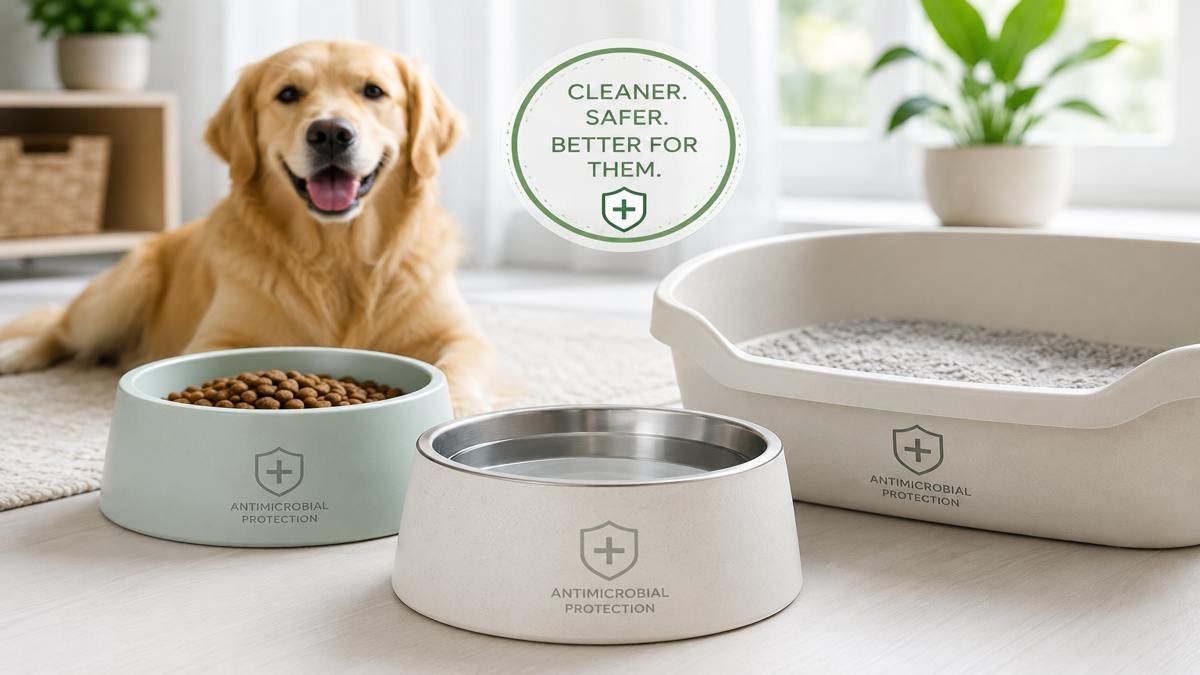
The humanization of pets is one of the biggest drivers behind this market trend. I often notice that consumers now care about pet hygiene in the same way they care about kitchen hygiene or baby products. This change is especially visible in North America and Europe.
At the same time, people are becoming more aware of bacteria such as Salmonella and E. coli that may exist on contaminated pet accessories. Wet pet food, standing water, and humid litter box environments can create ideal conditions for microbial growth.
Because of this, pet brands are under pressure to develop products that support cleaner and healthier living spaces.
Main Concerns Driving Consumer Demand
| Consumer Concern | Why It Matters |
|---|---|
| Bacterial growth | May increase hygiene risks for pets and owners |
| Odor buildup | Creates unpleasant indoor environments |
| Surface contamination | Raises concerns about household cleanliness |
| Frequent cleaning | Increases maintenance effort for pet owners |
| Product durability | Dirty surfaces may shorten product lifespan |
I remember speaking with a pet product buyer during an exhibition in Asia. She told me that many overseas customers now ask directly whether products include antimicrobial protection. Five years ago, very few buyers asked this question. Today, it has become an important selling point.
This is exactly why more manufacturers are exploring functional additives that add long-term value to pet products instead of competing only on price.
How Do Antimicrobial Plastics Help Reduce Bacteria, Odors, and Surface Contamination?
Standard plastics do not stop bacteria from multiplying. Once moisture and organic residue stay on the surface, microbes can grow quickly and create odor and contamination problems.
Antimicrobial plastics contain functional additives that continuously help reduce microbial growth on the surface. This helps improve hygiene, reduce odors, and maintain cleaner pet products during daily use.
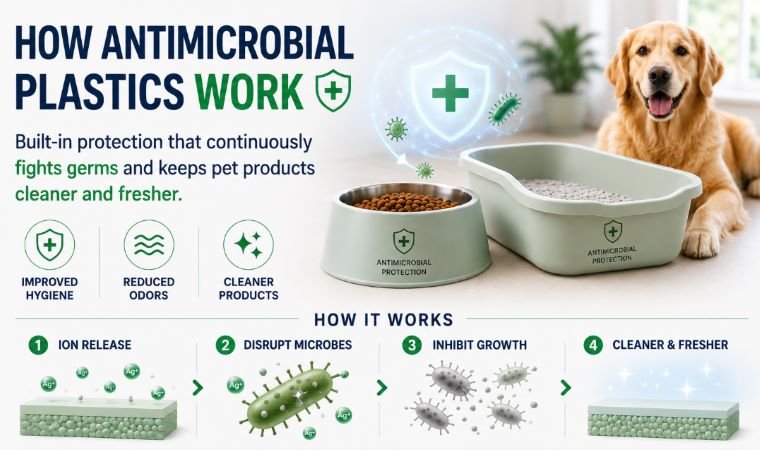
One important point that I always explain to customers is this: antimicrobial plastics do not replace normal cleaning. Instead, they provide extra protection between cleanings.
The antimicrobial additives are compounded directly into the plastic material during production. Unlike surface sprays or coatings, the antimicrobial function becomes part of the product itself.
At Shanghai Langyi Functional Materials Co., Ltd., we focus on developing antimicrobial additive solutions for plastic applications. Our team works closely with manufacturers to improve product hygiene while maintaining material performance, color stability, and processing efficiency.
Our antimicrobial additives are widely used in applications such as:
- Pet bowls
- Cat litter boxes
- Pet feeders
- Plastic storage containers
- Household plastic products
You can learn more about our antimicrobial additive solutions here:
https://www.antimicrobialadditive.com/
How Antimicrobial Additives Work
✔ Active Protection
Continuously releases active antimicrobial ions onto the plastic surface.
✔ Microbial Disruption
Helps damage bacterial cell structures and interrupt microbial activity.
✔ Growth Control
Reduces microbial reproduction and surface contamination during daily use.
✔ Odor Reduction
Helps keep pet bowls and litter boxes cleaner and fresher for longer.
✔ Long-Lasting Performance
Integrated directly into the plastic material for continuous protection.
Silver-ion antimicrobial technology is one of the most widely used solutions in the market because of its long-term effectiveness and broad-spectrum antibacterial performance.
At Langyi, we also understand that manufacturers care about more than antibacterial performance alone. Processing stability is equally important. Poor additive compatibility may cause color changes, black spots, or molding issues during production.
Because of this, we help customers select suitable antimicrobial systems based on:
- Resin type
- Injection molding temperature
- Product color
- Surface requirements
- Final application environment
This allows manufacturers to balance product appearance, safety, durability, and antimicrobial performance together.
How Can Manufacturers Choose Reliable and Pet-Safe Antimicrobial Additives?
Not all antimicrobial additives are suitable for pet products. Poor-quality additives may create safety concerns, unstable performance, or manufacturing problems.
Manufacturers should choose antimicrobial additives with proven safety, stable antibacterial performance, and good compatibility with plastic processing systems.
I believe this is one of the most important decisions for pet product manufacturers today. Overseas buyers are becoming more professional and more cautious when selecting suppliers.
Many customers now ask questions like:
- Is the antimicrobial technology pet safe?
- Does the additive affect food contact safety?
- Can the antibacterial performance last long term?
- Will the additive affect product appearance?
These are reasonable concerns. Reliable antimicrobial solutions should support both product performance and regulatory compliance.
Key Selection Factors
| Selection Factor | Importance |
|---|---|
| Antibacterial performance | Supports long-term hygiene goals |
| Material compatibility | Prevents molding defects and discoloration |
| Heat resistance | Suitable for injection molding processes |
| Durability | Maintains effectiveness during product lifespan |
| Safety compliance | Supports safer contact applications |
| Technical support | Helps manufacturers optimize production |
At Langyi, our technical team provides customized additive recommendations based on different plastic materials and applications. Dr. Tang founded Langyi with a simple belief: material science should solve practical problems in daily life.
Today, we continue helping manufacturers improve plastic products through functional additive technologies.
Conclusion
Antimicrobial plastics are becoming an important upgrade for modern pet products, helping manufacturers create cleaner, safer, and more valuable solutions for pet owners worldwide.
Contact Us
Shanghai Langyi Functional Materials Co., Ltd.
Website: http://www.antimicrobialadditive.com
If you are developing antimicrobial pet products or functional plastic solutions, our team is ready to help with additive selection, technical support, and customized recommendations.