
-300x210.jpg)
How Antimicrobial Additives Improve Swimming Pool Liners?
Are you tired of stubborn stains, slippery surfaces, and recurring microbial issues on pool liners despite regular chlorination? Many pool owners face this challenge, and traditional water treatment alone may not fully solve it.
Antimicrobial additives improve swimming pool liners by helping inhibit the growth of bacteria, mold, and algae directly on liner surfaces. They work alongside water treatment systems to provide continuous surface protection, helping maintain cleaner, more durable pool environments.
Most pool owners focus on water quality. That makes sense because clear water is the first thing people notice. Yet many hygiene problems begin on the liner surface itself. Understanding this hidden challenge is the first step toward building safer and longer-lasting pools.
Why Do Pool Microorganisms Remain a Concern Despite Chlorination?
You may carefully monitor chlorine levels and still notice discoloration, slippery areas, or recurring contamination on pool surfaces. This often happens because microorganisms are not only present in the water.
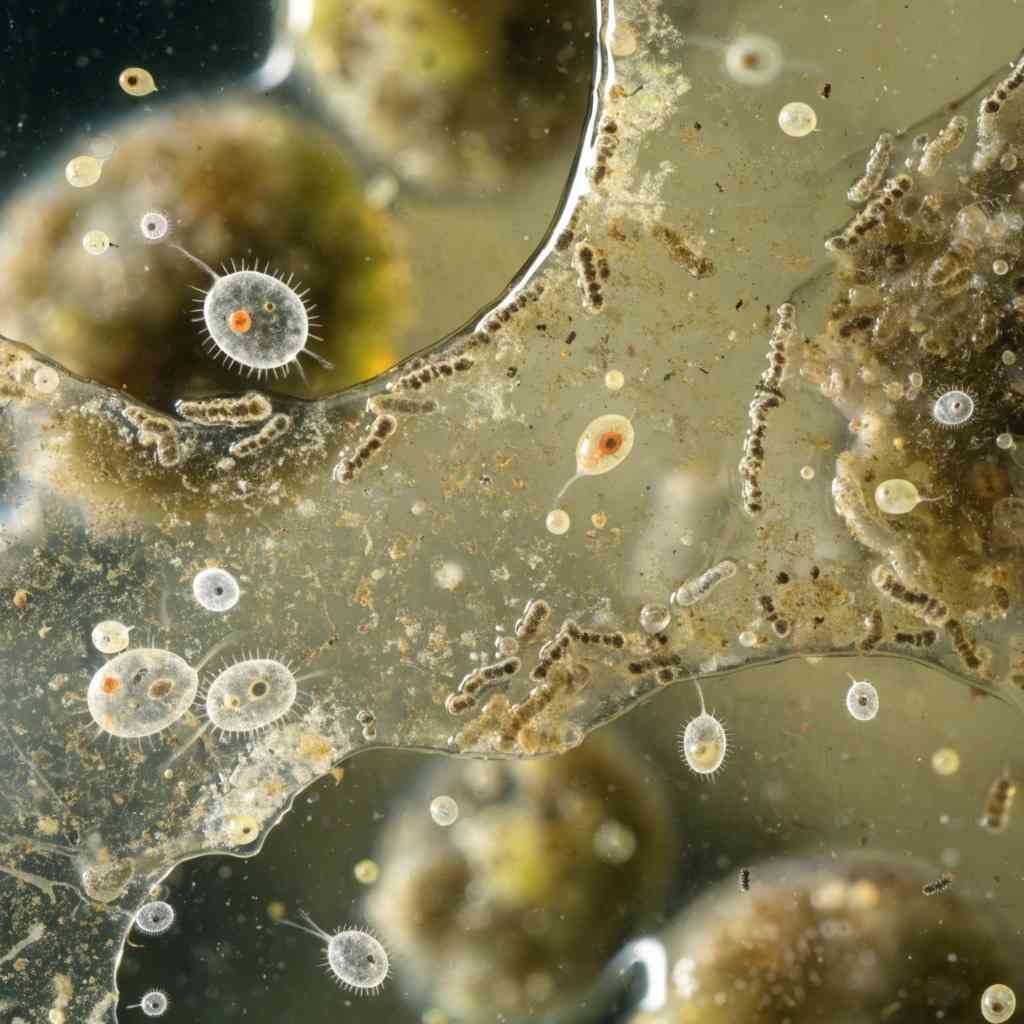
Chlorine is highly effective at disinfecting pool water. However, microorganisms can still attach to liner surfaces and begin forming protective biofilms. Once established, these biofilms become more difficult to remove through water treatment alone.
Chlorine Is Essential—but It Has Limits
Chlorine remains one of the most important tools for maintaining pool hygiene. It helps reduce microbial contamination throughout the water system.
However, chlorine concentration can fluctuate due to:
- Sunlight exposure
- Organic contaminants
- Heavy swimmer traffic
- Changes in water chemistry
At the same time, microorganisms that attach to surfaces gain an advantage. They begin producing protective layers that reduce direct exposure to disinfectants.
Surface Contamination Is Often Overlooked
In one project discussion with a pool product manufacturer, the team reported persistent staining near the waterline despite maintaining recommended chlorine levels. The issue was not water quality. The issue was microbial attachment on the liner surface.
This situation is common because water treatment and surface protection serve different purposes.
| Protection Method | Primary Target | Limitation |
|---|---|---|
| Chlorination | Pool water | Limited surface protection |
| Mechanical cleaning | Visible contamination | Temporary results |
| Antimicrobial additives | Liner surface | Continuous built-in protection |
This is why modern pool hygiene increasingly focuses on both water sanitation and surface protection.
What Are the Hidden Risks of Bacteria and Biofilm Growth on PVC Pool Liners?
Small stains or slippery patches may appear harmless at first. Yet they often indicate the presence of microbial colonies that can affect both appearance and material performance over time.
Biofilms can contribute to staining, unpleasant odors, increased cleaning requirements, and potential material degradation. Preventing microbial attachment early is often easier than removing established colonies later.
Understanding Biofilms
A biofilm is a community of microorganisms that attaches to a surface and creates a protective matrix around itself.
Once formed, biofilms can:
- Retain moisture
- Trap nutrients
- Encourage microbial growth
- Increase cleaning difficulty
The Impact on PVC Pool Liners
PVC pool liners are expected to remain attractive, flexible, and durable for many years. Yet continuous microbial activity can accelerate surface deterioration.
Common consequences include:
🔹 Surface Staining → Makes the pool look older and less appealing.
🔹 Biofilm Formation → Creates persistent microbial hotspots that are difficult to remove.
🔹 Odor Development → Leads to unpleasant smells and a poorer swimming experience.
🔹 Surface Degradation → Accelerates material aging and may shorten liner lifespan.
🔹 Higher Cleaning Frequency → Increases maintenance workload and operating costs.
For commercial facilities, hotels, water parks, and residential pools, these issues can lead to higher maintenance expenses and earlier liner replacement.
As hygiene expectations continue to rise worldwide, pool owners increasingly expect materials to contribute actively to cleanliness rather than relying solely on chemical treatments.
How Do Antimicrobial Additives Provide Continuous Protection for PVC Pool Liners?
Traditional cleaning methods remove contamination after it appears. Antimicrobial additives take a different approach by helping prevent microbial growth before it becomes a larger problem.
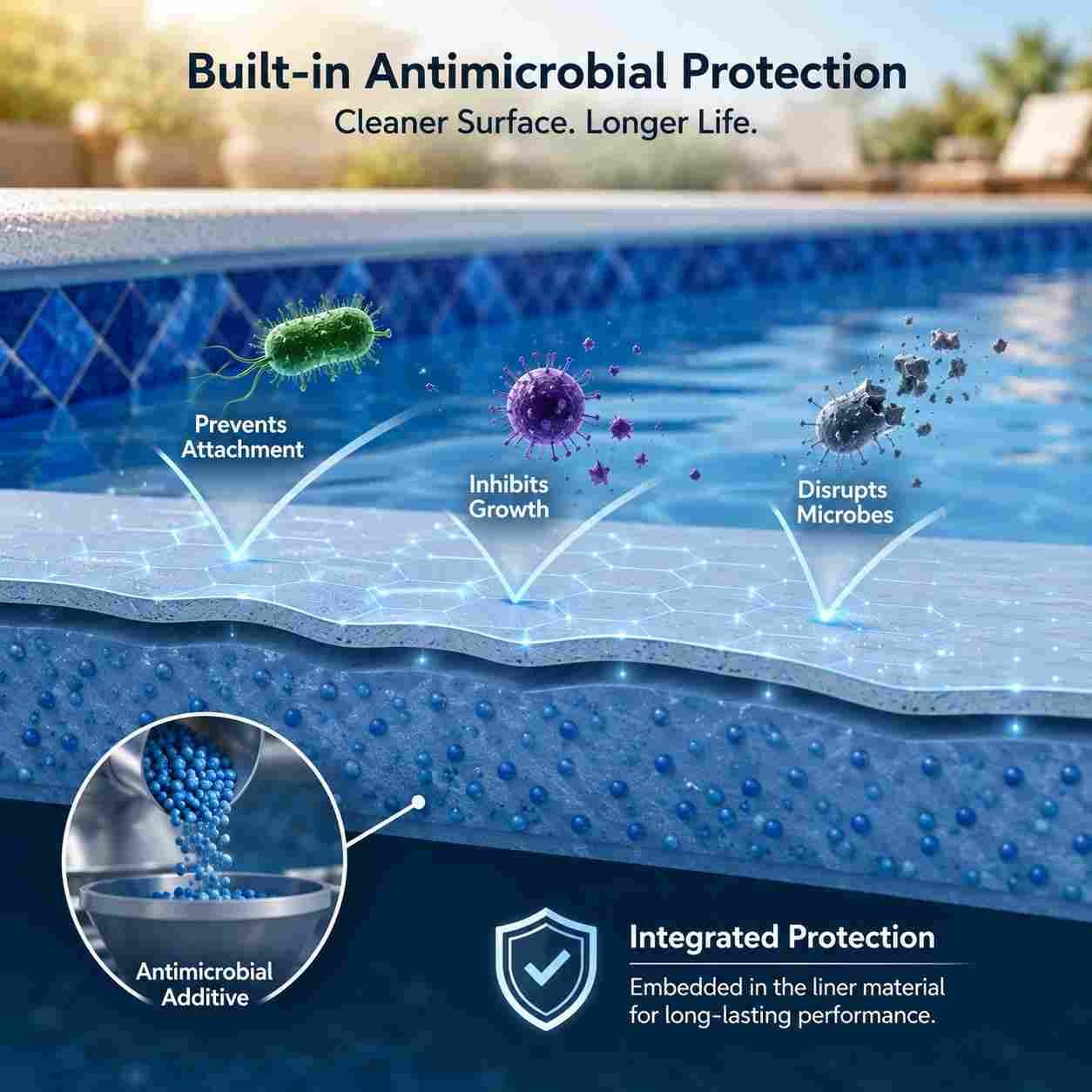
Antimicrobial additives are incorporated directly into the liner material during manufacturing. They help inhibit microbial growth on the surface throughout the product's lifetime and support long-term hygiene performance.
Built-In Protection Rather Than Surface Coating
Unlike temporary treatments, antimicrobial additives become part of the polymer structure.
This offers several advantages:
- Long-term effectiveness
- Uniform distribution throughout the material
- No need for reapplication
- Compatibility with existing manufacturing processes
Why PVC Pool Liner Manufacturers Are Adopting Antimicrobial Technology
Manufacturers are increasingly seeking ways to differentiate their products while addressing customer concerns about hygiene and durability.
Antimicrobial PVC pool liners can offer:
| Feature | Benefit |
|---|---|
| Continuous antimicrobial activity | Supports cleaner surfaces |
| Reduced biofilm formation | Easier maintenance |
| Improved stain resistance | Better appearance retention |
| Enhanced durability | Longer product life |
| Added product value | Competitive market advantage |
Langyi's Antimicrobial Solutions for PVC Pool Liners
At Langyi, we work closely with polymer manufacturers to develop practical antimicrobial solutions for real-world applications.
Langyi was established by Dr. Tang who graduated from Tsinghua University.Langyi focuses on functional additives that help manufacturers improve material performance while maintaining processing efficiency.
For swimming pool liner applications, our antimicrobial additives can be incorporated into PVC and other polymer systems to help:
- Inhibit bacterial growth on liner surfaces
- Reduce biofilm formation
- Improve hygiene performance
- Enhance product value and market differentiation
🔍 Explore Langyi's Antimicrobial Additive Solutions
Looking for antimicrobial technologies for swimming pool liners, PVC products, or other polymer applications?
👉 Visit our website:
🌐 https://www.antimicrobialadditive.com
Whether you are producing residential pool liners, commercial pool systems, or specialty aquatic products, our technical team can help identify suitable antimicrobial solutions for your application.
Conclusion
Water treatment remains essential for pool safety. However, long-term hygiene also depends on protecting the surfaces where microorganisms first attach. Antimicrobial additives help pool liners stay cleaner, last longer, and deliver greater value throughout their service life.
About Langyi
Langyi – China's Leading Functional Additives Manufacturer
To become a hidden champion in the functional additives industry through professionalism, innovation, and customer-focused solutions.
Contact Us
Website: https://www.antimicrobialadditive.com
If you are developing swimming pool liners, PVC products, antimicrobial plastics, or other hygiene-focused materials, contact Langyi to discuss customized antimicrobial additive solutions for your next project.