

-300x210.jpg)
Longer Shelf Life. Safer Products. Stronger Brand. The Case for Inorganic Antimicrobial Additives in 2026
Your products are failing silently. Bacteria grow where you can't see them. Your customers lose trust. Your competitors already switched to something better.
Inorganic antimicrobial additives protect products against bacteria, mold, and fungi by releasing metal ions that disrupt microbial cells. They stay active through heat, UV exposure, and time. For plastics, coatings, and textiles manufacturers, this means longer shelf life, safer products, and fewer customer complaints.
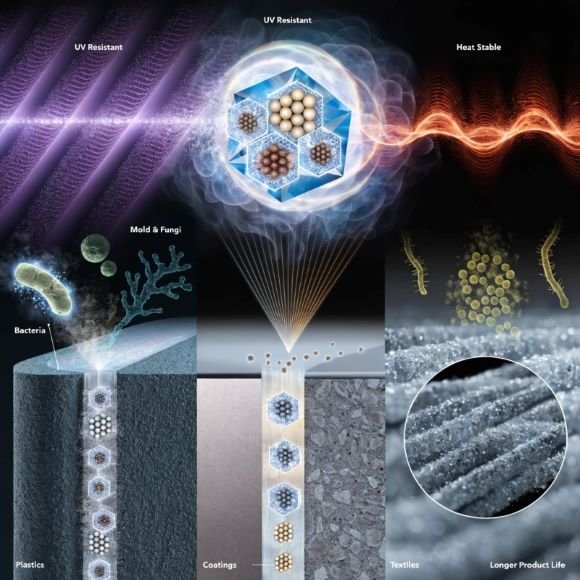
One thing I keep hearing is the same: "We added antimicrobial protection, but it didn't last." That's the real problem most manufacturers face. And it's the problem I want to help you solve.
Bacteria Don't Take Days Off — And Neither Should Your Protection?
Your product ships today. Six months later, it's in a customer's hands. Is the antimicrobial protection still there?
Inorganic antimicrobial additives don't break down over time. They stay active through the full product lifecycle — through heat, humidity, UV exposure, and repeated contact. For plastics, coatings, and textiles, protection on day one is still there on day 300.

Most organic biocides work well at first. Then they degrade. I've seen this pattern repeat across many different industries. A product passes quality testing. Then field complaints come in. Not because the base material failed — because the protection faded.
This is not a small problem. It's a hidden one. And hidden problems are always the most expensive kind.
Why Durability Matters More Than Initial Performance
Manufacturers often focus on antimicrobial efficacy at the point of production. But the real test is what happens over a product's full service life.
Here is a direct comparison between organic biocides and inorganic antimicrobials:
| Property | Organic Biocides | Inorganic Antimicrobials |
|---|---|---|
| Thermal stability | Low — degrades above 200°C | High — stable above 400°C |
| UV resistance | Poor | Strong |
| Active lifespan | Short-term | Long-term (full product lifetime) |
| Mechanism | Fast chemical release | Slow, sustained ion release |
| Regulatory pressure | Increasing (REACH, EPA) | More compliant options available |
| High-temp processing fit | Often not suitable | Yes |
When I look at this table, one thing stands out. Organic biocides work fast but don't stay. Inorganic additives work slower but don't stop.
Take a plastic component processed at 250°C. Organic biocides often don't survive that heat. The antimicrobial is gone before the part is even finished. Inorganic silver-based or zinc-based additives survive that process. They arrive in the final product intact and still active.
This is the durability gap. It's the main reason more manufacturers in 2026 are making the switch. Not because organic chemistry is bad. But because inorganic chemistry lasts. At Langyi, I work with manufacturers who need performance they can count on — not just at delivery, but across the full life of the product. That's where inorganic chemistry wins .
What Makes Inorganic Antimicrobial Additives the Smarter Choice for Plastics, Coatings & Textiles?
You're choosing an additive for the next three to five years of production. What do you actually need to know before you decide?
Inorganic antimicrobial additives outperform organic options in thermal stability, regulatory compliance, and long-term effectiveness. They work in most polymer and coating systems with no major reformulation. For textiles, they survive industrial washing without losing efficacy.
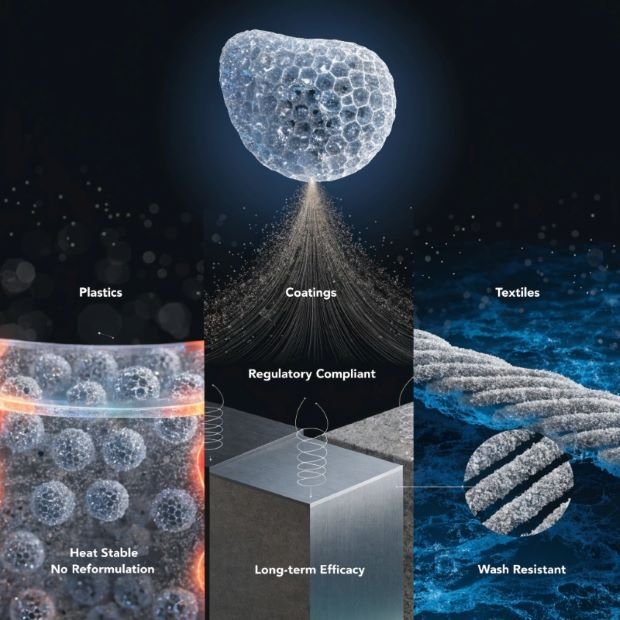
I talk to product developers and procurement teams every week. The question I hear most is: "Will it actually work in our process?" That's the right question. And the honest answer is: it depends on your substrate and your process conditions.
Let me break it down by material type.
Application Breakdown: What Works Best Where
Different industries have different needs. Inorganic antimicrobials cover most of them — but the specific formulation matters.
Plastics
High-temperature processing is the main challenge here. Injection molding, extrusion, and blow molding all run hot. Silver-based inorganic additives are stable above 400°C. They don't off-gas or decompose. They also don't change the color of the final part in most cases — which is one of the first things manufacturers ask about.
Coatings
Both water-based and solvent-based coatings work well with zinc-based or silver-based inorganic additives. The key advantage is mold and algae resistance over time. Exterior coatings in humid climates are a strong fit. The protection doesn't wash away and doesn't need re-application.
Textiles
Wash durability is the deciding factor in textiles. Organic treatments often fail after 20 to 30 wash cycles. Inorganic silver treatments, when properly bonded to the fiber, hold performance well past 50 cycles in standard testing.
| Application | Key Challenge | Inorganic Advantage | Recommended Type |
|---|---|---|---|
| Plastics | High processing temperature | Thermal stability | Silver-based (AgZnO, Ag-zeolite) |
| Coatings | Long-term outdoor exposure | UV and moisture resistance | Zinc-based or silver-based |
| Textiles | Wash durability | Fiber bonding stability | Silver ion or nano-silver |
| Medical packaging | Regulatory compliance | Non-toxic, non-leaching options | Zinc-based composites |
| Consumer electronics | Color neutrality | Low loading, high efficacy | Silver zeolite |
The future of antimicrobial protection isn't just effective — it's sustainable, compliant, and built to last. Inorganic chemistry delivers all three.
Ready to Future-Proof Your Product Line? Let's Start with the Right Additive.
You've read this far. That means you're thinking seriously about antimicrobial protection. What's the next step that actually moves your product forward?
Choosing the right inorganic antimicrobial additive starts with three questions: What is your processing temperature? What is your substrate? What regulatory market are you selling into? The answers narrow the options fast and get you to a working formulation quickly.
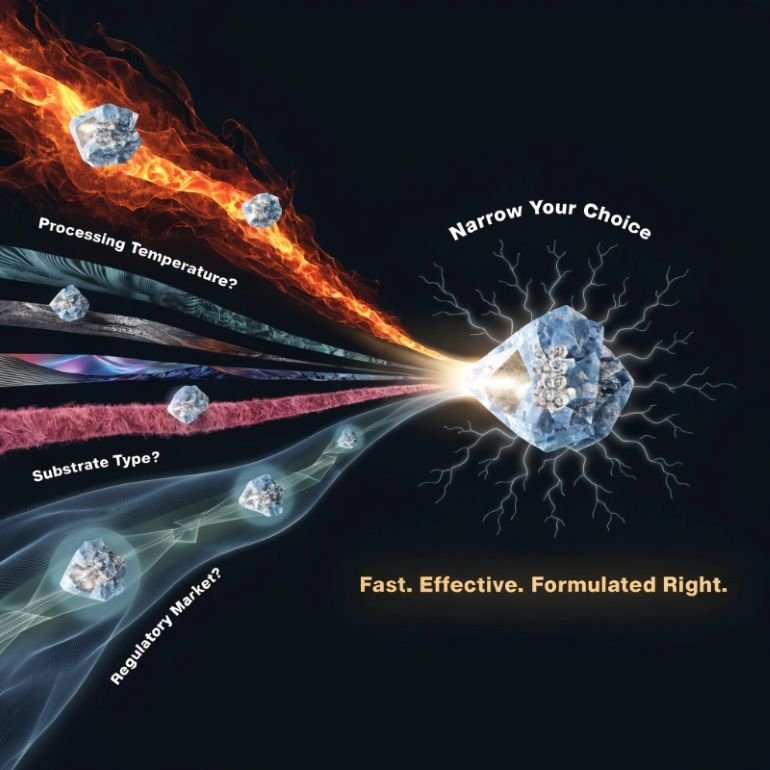
I've seen companies spend months evaluating additives they never needed. And I've seen others find the right fit in two weeks. The difference is almost always the same — how clearly they defined the problem before they started looking for solutions.
Here's the process I recommend.
A Simple Selection Framework for 2026
The process doesn't need to be complicated. It needs to be systematic.
Step 1: Define your processing constraints
Write down your processing temperature, pressure, and any chemical compatibility concerns. This cuts the wrong options immediately. If you're running above 250°C, organic biocides are already off the list before you start.
Step 2: Identify your target claim
Are you making an antibacterial claim? An antifungal claim? Are you targeting specific strains like MRSA or E. coli? The target claim determines the active chemistry you need. Being specific here saves weeks of unnecessary testing.
Step 3: Check your target market's regulations
Europe uses REACH and the Biocidal Products Regulation. The US follows EPA guidelines. China has GB standards. The additive you choose must be approved in every market you sell into. Get this wrong and the formulation work doesn't matter.
Step 4: Test early and test with the right method
Don't wait until production scale to test antimicrobial performance. Run ISO 22196 for plastics or JIS Z 2801 early in the development cycle. This saves reformulation cost and delays later.
| Step | Action | Why It Matters |
|---|---|---|
| 1. Processing constraints | Record max temp, pressure, compatibility | Eliminates wrong options immediately |
| 2. Target claim | Define bacteria and fungi targets | Determines which active ion you need |
| 3. Regulatory check | List every target market | Avoids costly compliance failures |
| 4. Early testing | Use ISO 22196 or JIS Z 2801 | Confirms performance before scale-up |
| 5. Partner selection | Work with a supplier who offers technical support | Speeds formulation and solves problems faster |
At Langyi, we guide manufacturers through every one of these steps. Our team — built on the research foundation Dr. Tang brought from Tsinghua University — doesn't just sell additives. We solve formulation problems. We look at your process, your substrate, and your market, and we tell you what will actually work.
Most companies I work with weren't sure where to start. That's fine. The important thing is to start with the right questions — not the right product catalog. Visit us at www.antimicrobialadditive.com to talk to our team or request a sample.
Conclusion
Inorganic antimicrobial additives are more durable, more compliant, and the smarter long-term choice for 2026. Start with the right chemistry. Protect your products — and your brand — for the long run.
Langyi — China's leading functional additives manufacturer. www.antimicrobialadditive.com