
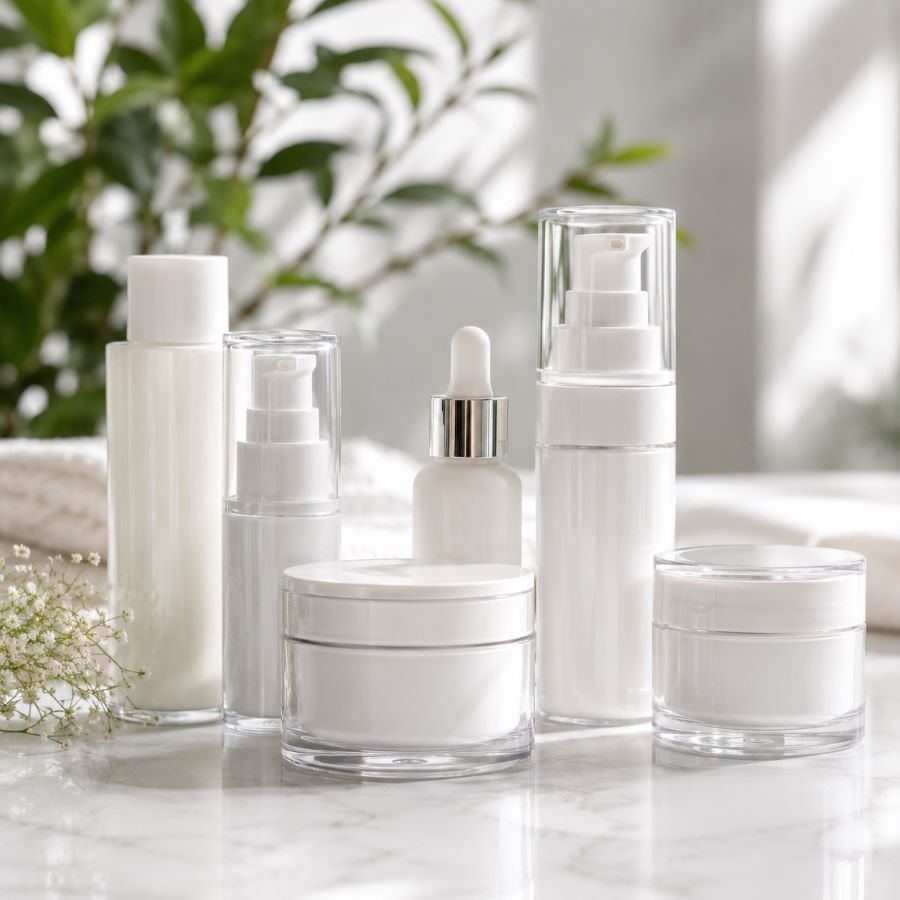
The Future of Cosmetic Packaging: How Do Antimicrobial Additives Create Safer Personal Care Products?
Cosmetic brands face a growing challenge: protecting products from microbial contamination while meeting consumers’ higher expectations for safety and clean beauty.
Antimicrobial additives help transform cosmetic packaging into an active protection layer. By integrating antimicrobial technology into packaging materials, manufacturers can reduce microbial growth and improve product safety throughout the product lifecycle.
![clean](https://antimicrobialadditive.com/wp-content/uploads/2026/07/clean.jpg
We have spent years exploring how small improvements in materials can create meaningful changes in everyday products. Cosmetic packaging was once viewed mainly as a container that protects the formula from physical damage. Today, it has a new role. It can become an active part of product protection.
The beauty industry is moving toward cleaner formulations and more transparent product experiences. Consumers want products that are not only effective but also safer to use. For cosmetic manufacturers, this creates a new challenge: how can packaging support product hygiene from the first use to the last?
This is where antimicrobial additives bring new possibilities. By adding functional protection directly into packaging materials, we can help create safer personal care products while maintaining the performance and appearance consumers expect.
Why Is Microbial Contamination a Growing Concern in Cosmetic Products?
Cosmetic manufacturers are facing increasing pressure to maintain product safety as consumer habits and product trends continue to change. Many modern formulations focus on natural ingredients and reduced preservatives, but these changes may also increase sensitivity to microbial risks.
Microbial contamination can happen during production, transportation, storage, or daily use. Repeated opening and closing of cosmetic containers creates more opportunities for microorganisms to enter and grow.
![microbial](https://antimicrobialadditive.com/wp-content/uploads/2026/07/microbial.jpg
The principles governing the interactions between materials and various environments are also applicable to cosmetic packaging. A material does not exist alone. It works together with moisture, temperature, contact conditions, and the surrounding environment.
For personal care products, packaging surfaces are especially important. Bottles, jars, caps, and closures are often touched many times during use. Without additional protection, these surfaces may become areas where microorganisms remain and multiply.
Common Microbial Risks in Cosmetic Packaging
Different microorganisms can affect both product quality and consumer experience.
| Microorganism | Possible Impact on Cosmetic Products |
|---|---|
| Bacteria | Product spoilage, unpleasant odor, potential skin concerns |
| Yeast | Texture changes, formula instability, discoloration |
| Mold | Visible growth, quality issues, reduced consumer confidence |
Traditional packaging solutions focus on strength, appearance, and compatibility with cosmetic formulas. However, they usually do not provide active protection against microbial growth.
This is why antimicrobial packaging is becoming an important trend in the personal care industry. It provides an additional protection layer that works together with existing preservation systems.
At Langyi, we focus on developing functional additive solutions that help manufacturers improve material performance. Our Silver Antimicrobial Additives and other [antimicrobial technologies](https://antimicrobialadditive.com/qa/ are designed for polymer applications, helping customers create safer and more hygienic packaging solutions.
How Do Antimicrobial Additives Help Create Safer and More Hygienic Cosmetic Packaging?
Traditional packaging mainly provides physical protection. Antimicrobial packaging adds another function: helping control microbial growth on material surfaces.
Antimicrobial additives are integrated into polymers during manufacturing. They provide continuous antimicrobial performance and help packaging materials maintain cleaner surfaces during everyday use.
The key idea is simple. Instead of applying a temporary protective layer, antimicrobial technology becomes part of the material itself.
How Does Antimicrobial Technology Work?
The working mechanism happens at a microscopic level. Certain antimicrobial additives, such as silver-based technologies, interact with microorganisms on the packaging surface and limit their ability to grow.
This creates a more controlled environment around the product.
| Function | Value for Cosmetic Packaging |
|---|---|
| Surface antimicrobial protection | Helps reduce microbial activity on packaging surfaces |
| Long-lasting performance | Supports protection throughout product usage |
| Material integration | Maintains function as part of the polymer structure |
At Langyi, we believe packaging should do more than simply hold a product. It should help brands deliver safer experiences to consumers.
Our antimicrobial additives can be customized according to different polymers and applications, including plastic bottles, cosmetic containers, caps, and other personal care packaging components.
The advantage of an integrated antimicrobial solution is that manufacturers do not need to redesign their entire packaging system. Instead, they can enhance existing materials with functional protection.
Advanced Antimicrobial Solutions for Personal Care Packaging Applications?
The future of cosmetic packaging is not only about attractive design. It is about combining appearance, performance, and safety into one material solution.
Advanced antimicrobial additives provide manufacturers with new ways to improve packaging hygiene and respond to changing market expectations.
For personal care brands, the right antimicrobial solution depends on many factors, including packaging material, product formula, processing conditions, and final application.
A shampoo bottle, a cream jar, and a makeup container may require different material strategies. Choosing the correct additive is important for achieving stable performance.
Selecting the Right Antimicrobial Solution
Different antimicrobial technologies provide different advantages.
Choosing the Right Antimicrobial Solution
Different personal care packaging applications require different antimicrobial strategies.
Silver-based antimicrobial additives are widely used when manufacturers need broad antimicrobial protection and long-lasting performance. They are suitable for many plastic packaging applications, including cosmetic containers, bottles, caps, and closures.
Zinc-based antimicrobial additives can provide additional functions such as antimicrobial protection and odor control, making them suitable for daily-use personal care packaging.
At Langyi, we evaluate each application based on polymer type, processing conditions, and product requirements. Our goal is not simply to provide an additive, but to help customers develop a reliable material solution.
Through professional technical support and customized recommendations, Langyi helps global partners create safer and higher-performance personal care packaging.
We do not believe in a one-size-fits-all approach. Every material system has different requirements.
Langyi was founded by Dr. Tang, a material scientist graduated from Tsinghua University. Our team focuses on providing functional additive solutions and technical recommendations based on customer needs.
As China's leading functional additives manufacturer, Langyi is committed to helping global partners improve their materials through professional knowledge and reliable solutions.
Our mission is to become a hidden champion of the functional additives industry by creating value through expertise and innovation.
For personal care packaging manufacturers looking for antimicrobial material solutions, our team provides professional support from additive selection to application development.
Learn more about Langyi antimicrobial solutions: https://www.antimicrobialadditive.com
Conclusion
Antimicrobial additives are transforming cosmetic packaging into smarter protection solutions, helping brands create safer, cleaner, and more trusted personal care products.