
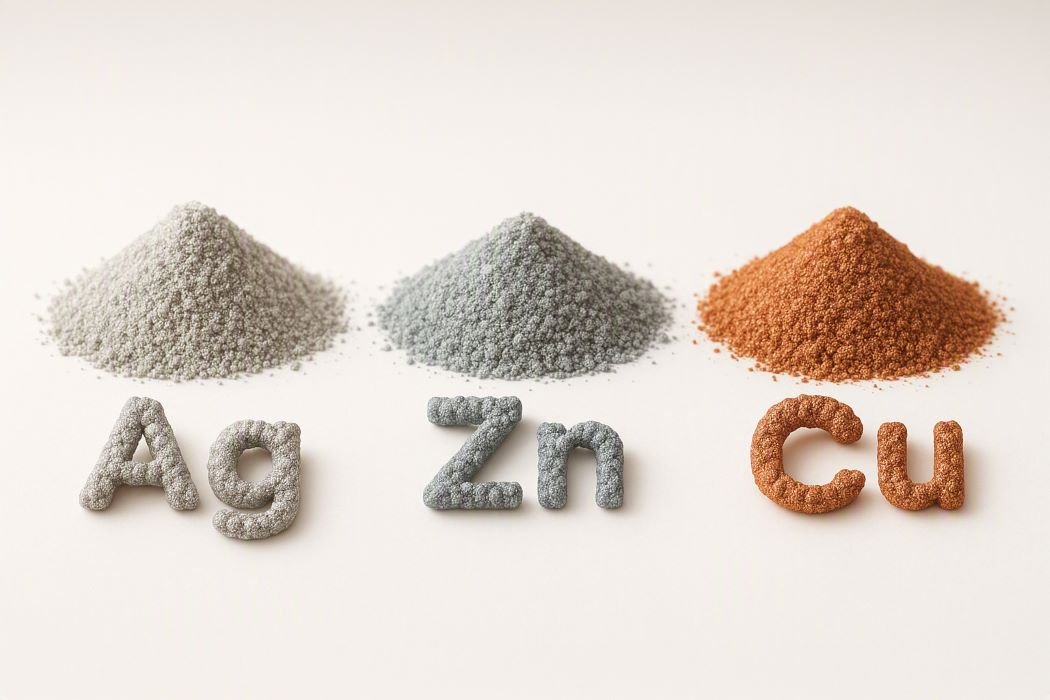
Silver vs. Zinc vs. Copper: How to Choose the Right Antimicrobial Additive for Different Applications?
Feeling overwhelmed by antimicrobial choices? Choosing the wrong additive can lead to poor performance, processing problems, or unnecessary cost.
Choosing the right antimicrobial additive means balancing antimicrobial performance, durability, material compatibility, processing conditions, and cost. Silver, zinc, and copper can each fit different material systems and applications.
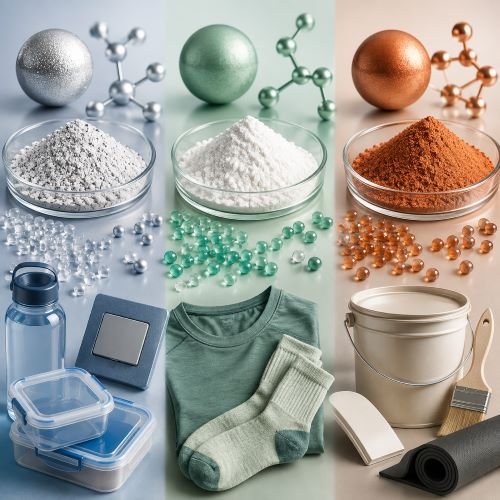
We have seen how difficult antimicrobial selection can become when a project moves from laboratory testing to real production. A result that looks promising on paper may not work well in a polymer, textile, or coating. We believe the better approach is to look at the whole material system. Silver, zinc, and copper each bring different characteristics to the table. The right question is not simply which ion has stronger antimicrobial activity. The better question is which technology fits the product, process, and performance target.
Silver, Zinc or Copper: What Makes Each Antimicrobial Ion Different?
You know you need antimicrobial protection, but the choices can look very similar. Choosing only by price or antimicrobial test results can create problems later.
Silver, zinc, and copper ions can all provide antimicrobial functions, but they behave differently in different formulations. Silver is often considered when strong antimicrobial performance and broad application flexibility are important. Zinc can be useful when material compatibility, durability, and cost need to be balanced. Copper can be attractive for applications where its antimicrobial performance and formulation characteristics fit the product.
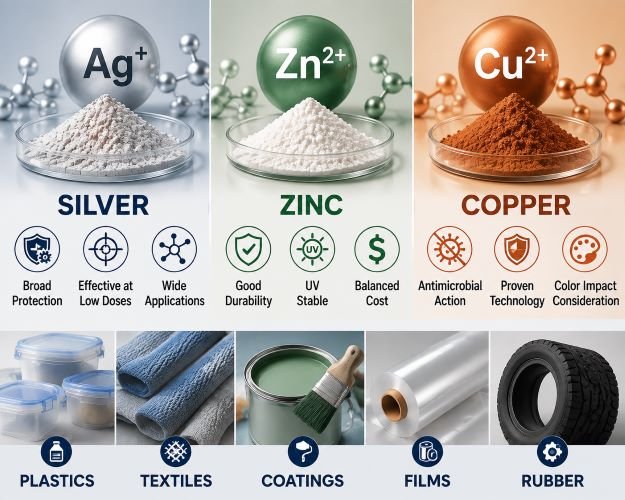
When we evaluate an antimicrobial technology, we first look at the active ion and then at the complete additive system. The carrier, particle size, dispersion, release behavior, loading level, and base material can all influence the final result. This is why we do not treat silver, zinc, or copper as a simple ranking.
Silver ions: strong antimicrobial performance with broad application potential
Silver ions have a long history of antimicrobial use. They can interact with microbial cell structures and interfere with important biological processes. This makes silver-based technologies suitable for many applications where antimicrobial performance is an important product requirement.
We often consider silver when the product needs a strong antimicrobial function and when the formulation can support the required additive system. Silver-based technologies can be used in plastics, fibers, textiles, coatings, and other functional materials.
However, silver is not automatically the right choice for every product. Cost, formulation stability, appearance, processing conditions, and regulatory requirements still need to be considered.
Zinc ions: a practical option when several requirements need to work together
Zinc-based antimicrobial technologies can provide a useful balance between antimicrobial function, material compatibility, and cost in suitable formulations.
Zinc-based systems are also worth considering when the material will face outdoor or demanding environmental conditions. However, we would not assume that every zinc compound will behave in the same way. The specific zinc chemistry, carrier, loading level, and base material all matter.
For this reason, we prefer to evaluate zinc-based additives as part of the complete formulation rather than treating “zinc” as one single technology.
Copper ions: antimicrobial performance with formulation and appearance considerations
Copper ions also have well-established antimicrobial properties. They can interact with microbial cells and affect important cellular processes.
Copper-based additives can be useful in plastics, fibers, coatings, rubber, films, and other materials. At the same time, some copper-based formulations can influence the appearance of a finished product. This matters when the product requires a light color, high transparency, or a specific visual finish.
The important point is simple: copper can be a strong candidate when its material characteristics fit the application, but appearance and formulation compatibility should be checked during development.
| Selection factor | Silver-based technologies | Zinc-based technologies | Copper-based technologies |
|---|---|---|---|
| Antimicrobial performance | Often suitable for demanding antimicrobial applications | Suitable for many applications when formulation is optimized | Suitable for many antimicrobial applications |
| Material compatibility | Depends on carrier, loading, and substrate | Depends on zinc chemistry and substrate | Depends on copper chemistry, carrier, and substrate |
| Processing stability | Formulation dependent | Formulation dependent | Formulation dependent |
| Appearance | Some systems may affect color | Often suitable for applications where color is less restrictive | Some systems may influence color |
| Cost consideration | Often requires a higher material budget | Can offer a useful cost-performance balance | Can be attractive for selected applications |
| Typical applications | Plastics, textiles, fibers, coatings | Plastics, coatings, fibers, and other materials | Plastics, fibers, coatings, rubber, and films |
We use this table as a starting point rather than a final ranking. The same antimicrobial ion can perform differently in different materials. The next step is to match the technology with the application.
Which Antimicrobial Additive Works Best for Plastics, Textiles and Coatings?
You may already know the material you want to protect. The harder question is which antimicrobial additive can work with the way that material is processed and used.
For plastics, we focus on processing temperature, dispersion, polymer compatibility, and long-term performance. For textiles, we focus on fiber compatibility, wash durability, finishing methods, and the required antimicrobial function. For coatings, we look at binder compatibility, dispersion, curing conditions, and surface performance.
We have seen projects where the initial antimicrobial test looked promising, but the formulation created problems during production. In one textile development situation, the main challenge was not simply achieving antimicrobial activity. The treatment also needed to remain effective after repeated use and washing. This is why we always look at the production method and service conditions before recommending a technology.
Antimicrobial additives in plastics
Plastics are often processed under heat and shear. This makes thermal stability and dispersion important parts of additive selection.
We first ask what polymer the customer is using. PP, PE, ABS, PVC, PET, and other polymers can require different additive systems. We then look at the processing temperature and residence time. The additive must remain suitable under the actual manufacturing conditions.
We also pay close attention to dispersion. Poor dispersion can create inconsistent antimicrobial performance and may affect the appearance or physical properties of the final product.
For customers working with polypropylene, Langyi also develops antimicrobial solutions designed for PP applications and masterbatch-based processing. This approach can make antimicrobial additive integration easier during polymer processing.
Antimicrobial additives in textiles
Textile applications create a different set of challenges. The additive needs to work with the fiber system and the selected manufacturing process.
For example, an antimicrobial technology can be introduced during fiber production or applied as a finishing treatment. These two approaches have different advantages.
When antimicrobial functionality is incorporated during spinning, the additive becomes part of the fiber production process. This can support long-term functionality. Finishing treatments offer more flexibility because they can be applied to finished fabrics.
We consider the fiber type, spinning conditions, finishing process, washing requirements, and target microorganisms before choosing between these approaches.
Langyi provides both antimicrobial additives for fiber applications and antimicrobial finishing solutions. This gives customers more than one route to introduce antimicrobial functionality into textiles.
Antimicrobial additives in coatings
Coatings need another type of evaluation. The additive must work with the binder and other components in the formulation.
We look at dispersion, curing conditions, surface exposure, appearance, and the environment where the coating will be used. An interior coating and an exterior coating may face very different conditions.
A coating used in a humid environment may require different durability considerations from a coating used in a dry indoor environment. A transparent coating may also have different requirements from an opaque coating.
This is why We recommend testing the complete coating formulation rather than evaluating the antimicrobial ingredient alone.
| Application | Main questions I ask | Key selection considerations |
|---|---|---|
| Plastics | What polymer and processing conditions are used? | Thermal stability, dispersion, compatibility, appearance |
| Textiles | How is the antimicrobial function introduced? | Fiber compatibility, wash durability, finishing process |
| Coatings | What binder and curing system are used? | Dispersion, compatibility, surface performance |
| Films & rubber | What processing and service conditions apply? | Heat resistance, dispersion, durability, appearance |
The material is only one part of the decision. We also need to understand how the finished product will be used.
How to Choose the Right Antimicrobial Additive for Your Product?
You may have technical data in front of you and still find the final choice difficult. I have found that a simple selection process can make the decision much clearer.
We start with the product goal, then look at the material and manufacturing process. After that, We consider durability, appearance, regulatory requirements, and cost. Finally, We validate the selected formulation through appropriate testing.
1. Define the antimicrobial goal
We first ask what the customer wants the material to achieve.
Does the product need to inhibit bacterial growth? Is mold control also important? Is odor control part of the product requirement? Which microorganisms need to be evaluated?
The answer affects the choice of antimicrobial technology and the test method.
We also ask what type of claim the finished product may carry. Antimicrobial claims can have different regulatory requirements in different markets. For products sold internationally, We recommend reviewing the relevant regulatory framework early rather than waiting until the end of development.
2. Check material and processing compatibility
The next step is to understand the material.
We need to know whether the product is made from PP, PE, PVC, ABS, PET, rubber, textile fibers, or a coating system. We also need to understand the processing temperature, shear, curing conditions, and other manufacturing factors.
For plastics, dispersion is especially important. An antimicrobial additive that is not distributed well throughout the polymer may not provide consistent performance.
Langyi offers antimicrobial additives and customized antimicrobial masterbatch solutions for materials including PP, PE, ABS, PET, PVC, and other plastics. This is useful when customers want to introduce antimicrobial functionality without changing their entire manufacturing process.
3. Consider the product's end use
We then look at where the product will be used.
A reusable household product may experience frequent handling and cleaning. A textile may experience repeated washing. An outdoor plastic product may face sunlight, moisture, and temperature changes. A coating may need to maintain its function under a specific environmental condition.
These factors can change the selection.
For example, we would not recommend an antimicrobial additive for an outdoor plastic product in the same way that we would evaluate an additive for an indoor consumer product. The target performance may be different, and the material system may also be different.
4. Balance performance, durability, compatibility, and cost
This is where our core approach comes in.
I do not believe that antimicrobial additive selection should be based on one number from one laboratory test. I look at the full balance.
| Consideration | Questions we ask |
|---|---|
| Antimicrobial performance | Which microorganisms need to be controlled, and what performance level is required? |
| Compatibility | Will the additive work with the material and formulation? |
| Processing | Can it withstand the actual manufacturing conditions? |
| Durability | How long does the antimicrobial function need to remain effective? |
| Appearance | Could the additive affect color, transparency, or surface finish? |
| Regulatory requirements | What requirements apply to the target market and product claim? |
| Cost | What additive level and total cost fit the product target? |
This is also where we believe Langyi can add value beyond supplying a raw material.
Langyi was founded by Dr. Tang, a material scientist who graduated from Tsinghua University. Our team focuses on functional additives and material solutions. We work with customers to understand their materials, processing conditions, and product goals before suggesting an antimicrobial technology.
Our antimicrobial product portfolio includes silver-ion, zinc-ion, and copper-ion technologies, as well as [antimicrobial masterbatches]() and textile finishing solutions. We also support different application areas, including plastics, textiles, coatings, films, rubber, fibers, and other functional materials.
For customers who are still comparing silver, zinc, and copper, we believe the most useful starting point is not a product name. It is the application.
Once we understand the application, material, processing conditions, target microorganisms, durability requirements, and cost target, we can help narrow the options and identify suitable products for testing.
What does this mean for your product development?
Our approach is simple:
Application → Material → Processing → Antimicrobial Requirement → Additive Selection → Testing → Product Validation
This process helps reduce guesswork. It also gives the customer a clearer reason for choosing one antimicrobial technology over another.
For example, a customer developing an antimicrobial PP product may need a different solution from a textile manufacturer looking for long-lasting odor control. A coating manufacturer may have another set of requirements.
That is why we see antimicrobial additives as part of material engineering, not simply as an ingredient added at the end of product development.
If you are comparing silver, zinc, or copper antimicrobial technologies, we recommend starting with your product requirements and then working backward toward the additive. The right balance depends on the material, process, performance target, durability requirement, and cost of the final product.
Conclusion
Silver, zinc, and copper each offer useful antimicrobial options. We choose among them by looking at the complete application, material system, processing conditions, durability needs, regulatory requirements, and cost.