
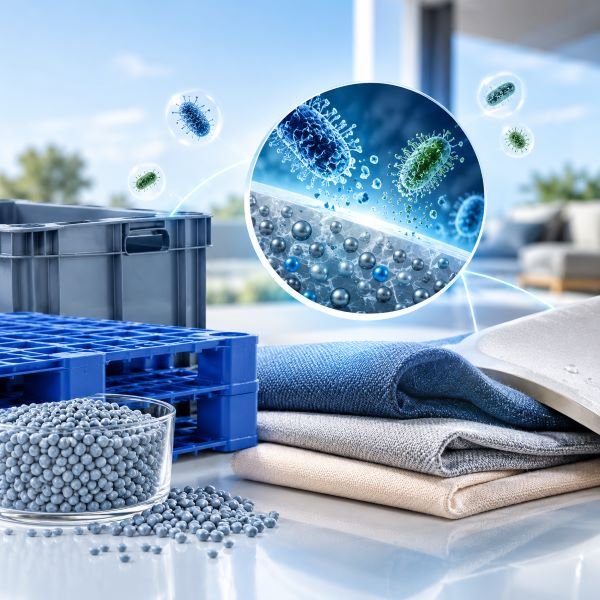
Stains, persistent odors, and microbial growth can affect product appearance, hygiene, and maintenance needs. Inorganic antimicrobial additives offer a material-based approach to help manage these issues and support long-term product performance.
Unlike surface treatments applied after manufacturing, antimicrobial additives can be incorporated directly into plastics, textiles, and coatings. Depending on the formulation, they can help inhibit the growth of targeted microorganisms on treated surfaces, complementing routine cleaning and material maintenance.
However, antimicrobial protection does not automatically make a product more durable. Its contribution to service life depends on the type of microbial challenge, the material formulation, the additive's performance, and the conditions in which the product is used. Understanding these factors helps manufacturers determine where antimicrobial technology can deliver practical value.
How Can Microbial Growth Affect the Service Life of Plastic and Textile Products?
Microbial growth can affect the appearance, odor, and maintenance requirements of products used in damp, warm, or frequently handled environments. In some applications, microbial activity may also contribute to material deterioration, although the extent of damage varies considerably by material type and exposure conditions.
Plastic and textile products are not equally susceptible to microbial damage. Some synthetic polymers resist direct microbial degradation, while additives, surface residues, natural fibers, and other formulation components may be more vulnerable under suitable conditions.
Aesthetic Damage and Persistent Odors
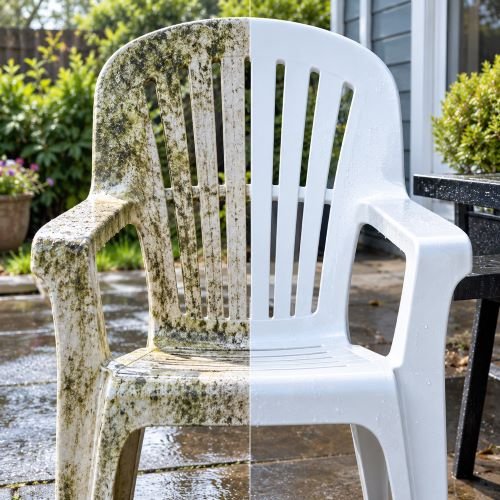
Visible discoloration and unpleasant odors are common concerns in products exposed to moisture and repeated use. Certain bacteria and fungi can produce pigments or odor-causing metabolites, contributing to staining and unpleasant smells on susceptible surfaces.
Examples include:
- Plastic products: Outdoor furniture, bathroom accessories, and reusable containers may develop surface discoloration or odors when moisture, organic residues, and suitable environmental conditions support microbial growth.
- Textiles: Upholstery, sportswear, and other frequently used fabrics may retain odors when moisture and residues encourage microbial activity.
- Coatings and painted surfaces: Microbial growth on susceptible coatings can contribute to discoloration and increased cleaning requirements, particularly in humid environments.
These issues do not necessarily indicate that the underlying material has lost its mechanical strength. Nevertheless, persistent stains, odors, and additional maintenance can reduce a product's perceived quality and practical usability.
When Can Microorganisms Contribute to Material Degradation?
Some microorganisms can metabolize specific organic compounds or contribute to the deterioration of susceptible materials. The effect depends on the polymer chemistry, formulation, environmental conditions, and microorganisms involved.
| Material or application | Potential microbial-related issue | Possible consequence |
|---|---|---|
| Plasticized PVC | Certain microorganisms may affect susceptible plasticizers or other formulation components under suitable conditions. | Changes in flexibility or material properties in susceptible formulations |
| Cotton and other natural-fiber textiles | Fungal or bacterial growth under damp conditions may damage fibers. | Reduced strength, discoloration, or fabric deterioration |
| Paints and organic coatings | Microbial colonization may affect susceptible binders or occur alongside surface contamination. | Discoloration, increased maintenance, or deterioration in susceptible systems |
It is important to distinguish microbial surface growth from direct biodegradation of the underlying material. Staining or odor alone does not establish that a polymer is being degraded, and many conventional plastics are not readily broken down by microorganisms under ordinary service conditions.
For manufacturers, the practical question is whether microbial growth contributes to a specific product problem—and whether controlling that growth can improve hygiene, reduce maintenance demands, or help preserve the product's intended performance.
How Do Inorganic Antimicrobial Additives Help Protect Materials Over Time?
Inorganic antimicrobial additives, including silver-based and zinc-based technologies, can be incorporated into suitable polymer, textile, and coating formulations to help inhibit the growth of targeted microorganisms.
Unlike a surface spray that may be removed through cleaning, an additive incorporated during manufacturing can provide antimicrobial functionality within the finished material. Its performance, however, depends on the active agent, carrier system, distribution within the material, surface availability, and exposure conditions. Incorporation into a material does not guarantee that antimicrobial activity will remain unchanged throughout the product's service life.
Built-In Antimicrobial Functionality
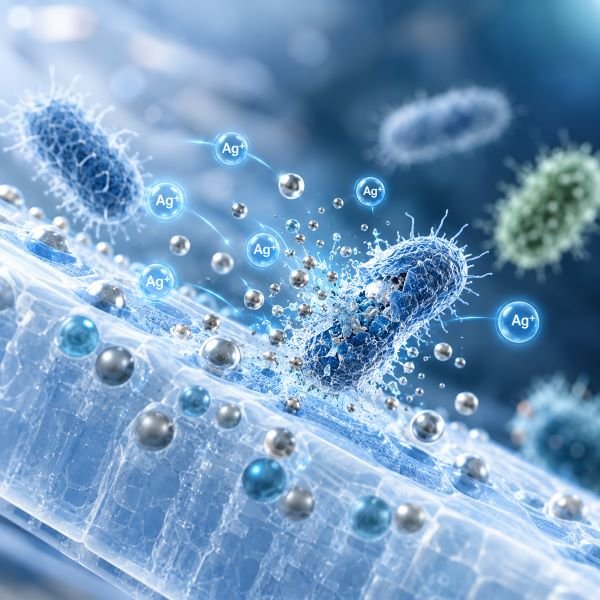
Many inorganic antimicrobial systems use active agents such as silver ions, sometimes supported by inorganic carriers such as glass or ceramic materials. The carrier and formulation help determine how the active agent is incorporated into the host material and made available at its surface.
In silver-ion systems, antimicrobial activity can involve interactions with microbial cell envelopes, proteins, enzymes, and other cellular components. These interactions may interfere with essential microbial functions and inhibit the growth of susceptible microorganisms.
Depending on the technology, the active agent may become available through ion release or other surface-related mechanisms. Release behavior and antimicrobial performance vary by formulation, processing conditions, moisture exposure, and the target microorganism.
For manufacturers, incorporating antimicrobial functionality during material production can offer several potential advantages:
- Integrated functionality: Antimicrobial properties can be designed into the material rather than relying exclusively on a post-production surface treatment.
- Application-specific formulation: Additives can be evaluated for compatibility with different polymers, textiles, and coatings.
- Potentially durable performance: Suitable formulations may retain antimicrobial activity after representative use and cleaning cycles, subject to validation.
- Support for hygiene management: In appropriate applications, antimicrobial materials can help inhibit targeted microbial growth and complement established cleaning procedures.
How Antimicrobial Ions Interact with Microorganisms
The mechanisms of inorganic antimicrobial agents vary by active ingredient and microorganism. Silver ions, for example, can interact with several biological targets.
| Mechanism | General description | Potential effect |
|---|---|---|
| Interaction with cell envelopes | Active ions interact with components of microbial cell walls or membranes. | May interfere with membrane integrity and normal cellular function |
| Interference with proteins and enzymes | Ions can interact with functional groups in proteins and other cellular components. | May disrupt essential metabolic processes |
| Effects on intracellular functions | Under suitable conditions, active ions may affect processes involving nucleic acids and other cellular structures. | May interfere with microbial growth and reproduction |
These mechanisms do not mean that every antimicrobial additive works identically or is effective against all microorganisms. Performance should be established through appropriate testing using defined target organisms and relevant test conditions.
Antimicrobial Protection and Product Service Life
Antimicrobial additives can contribute to product longevity indirectly when microbial growth is a meaningful cause of staining, odor, contamination, or material deterioration. By helping manage these issues, suitable formulations may reduce some maintenance burdens and help preserve product acceptability.
However, antimicrobial additives do not automatically improve tensile strength, impact resistance, UV stability, abrasion resistance, or other physical properties. Those characteristics must be evaluated separately through material testing.
At Langyi, inorganic antimicrobial additive solutions are developed for applications where controlling microbial growth on treated materials is an important consideration. Manufacturers can explore Langyi's antimicrobial additive solutions when assessing potential options for their materials and products.
What Should Manufacturers Consider When Choosing Antimicrobial Additives for Long-Term Performance?
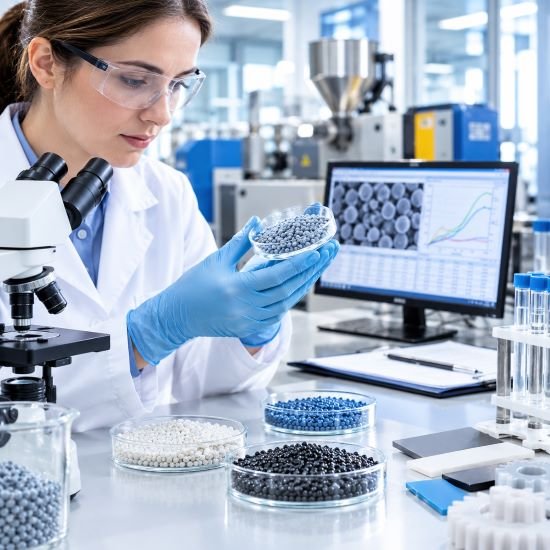
Selecting an antimicrobial additive involves balancing antimicrobial efficacy with material compatibility, processing stability, durability, regulatory requirements, and cost. The right choice depends on the intended application rather than on antimicrobial performance alone.
Key Selection Criteria
1. Antimicrobial performance
Determine which microorganisms are relevant to the application and evaluate supporting test data. Review the test method, exposure conditions, controls, and reported results rather than relying on broad claims of antimicrobial effectiveness.
2. Material compatibility
The additive should be suitable for the intended polymer, textile, or coating system. Compatibility testing should assess potential effects on color, transparency, flexibility, mechanical properties, and other product specifications.
3. Processing stability
For plastics, the additive must tolerate the temperatures, residence times, and processing conditions used in extrusion, injection molding, or other manufacturing operations. Processing stability should be confirmed for the specific formulation.
4. Durability under actual use conditions
Evaluate antimicrobial performance after representative washing, abrasion, weathering, aging, or other relevant exposure. An additive's initial laboratory performance does not necessarily predict how well it will perform after prolonged use.
5. Safety and regulatory compliance
Requirements depend on the active substance, product category, intended claims, and target market. In the United States, EPA requirements may apply to certain antimicrobial pesticide products and claims; in the European Union, relevant products and claims may fall under the Biocidal Products Regulation (BPR). Food-contact applications can involve additional requirements. Regulatory status should be verified for the specific additive and end use.
A Practical Checklist for Additive Selection
| Consideration | Questions to ask | Why it matters |
|---|---|---|
| Antimicrobial efficacy | Has performance been demonstrated against the target microorganisms using an appropriate test method? | Helps establish whether the additive addresses the intended problem |
| Heat and processing stability | Can the additive withstand the actual manufacturing conditions? | Helps maintain functionality and product quality during processing |
| Material compatibility | Does the formulation affect color, clarity, flexibility, or mechanical performance? | Helps preserve the product's specified properties |
| Performance after aging | Does antimicrobial activity remain after representative cleaning and wear? | Helps assess durability under realistic service conditions |
| Safety and compliance | Does the additive meet the requirements for the intended product, claims, and market? | Supports responsible product development and market access |
| Cost and formulation efficiency | What additive concentration and processing approach meet the application requirements? | Helps balance performance with manufacturing economics |
The most reliable approach is to define the product's primary challenge first, then validate the additive in the actual material system. Laboratory screening can identify promising candidates, while application-level testing helps determine whether the formulation meets performance requirements over time.
Manufacturers considering silver-based solutions can explore Langyi's silver antimicrobial agents as part of their material development and evaluation process.
Conclusion
Inorganic antimicrobial additives can help inhibit microbial growth on treated materials, supporting hygiene management and potentially reducing microbial-related staining, odors, and maintenance challenges in suitable applications.
Their contribution to product service life depends on whether microbial activity is a significant source of the problem. Long-term performance also relies on material formulation, processing stability, resistance to physical wear, and conditions of use.
For manufacturers, the goal is not simply to add antimicrobial functionality, but to select a compatible, validated solution that addresses a clearly defined application need. By combining appropriate antimicrobial technology with sound material design and routine maintenance, product developers can make more informed decisions about performance, durability, and service life.
To learn more about inorganic antimicrobial additive options for plastics, textiles, and other material applications, visit Langyi's official website.