
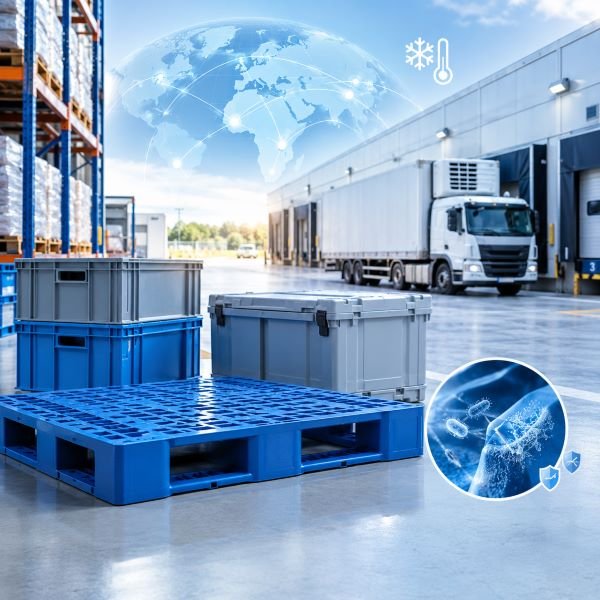
Reusable plastic pallets and containers move through warehouses, refrigerated trucks, distribution centers, and processing facilities. Repeated handling and changing environmental conditions can complicate hygiene management. Antimicrobial additives can provide an additional layer of surface protection when combined with established cleaning and sanitation procedures.
By incorporating antimicrobial additives into plastic materials during manufacturing, producers can develop pallets and containers designed to help inhibit microbial growth on their surfaces. For cold chain operators, this approach offers a way to complement routine hygiene practices while supporting the long-term use of reusable logistics equipment.
As global cold chains become more complex, maintaining consistent hygiene across reusable logistics assets is an important operational consideration. Understanding the challenges these materials face helps manufacturers identify where antimicrobial technology may add value.
Why Is Hygiene a Challenge for Reusable Pallets and Containers in the Global Cold Chain?
Reusable pallets and containers are exposed to repeated handling, moisture, temperature fluctuations, and potential contamination from transported goods. These conditions can make consistent hygiene management challenging, particularly when equipment moves rapidly between different facilities.
Cold environments can slow the growth of many microorganisms, but they do not necessarily eliminate them. Some microorganisms can survive refrigeration, while moisture and residual organic matter may create favorable conditions for microbial growth when temperatures and other environmental factors permit.
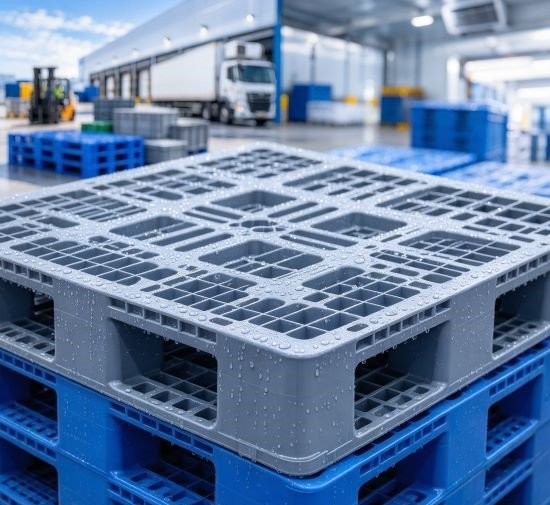
Several factors deserve particular attention when assessing the hygiene performance of reusable logistics materials.
Key Hygiene Challenges in Cold Chain Operations
- Temperature fluctuations and condensation: Moving equipment between refrigerated and ambient environments can cause moisture to accumulate on surfaces, potentially complicating hygiene management.
- Residual organic matter: Food residues and other contaminants can provide nutrients for microorganisms if equipment is not cleaned adequately.
- Surface wear and damage: Repeated handling can create scratches and damaged areas that are more difficult to clean effectively.
- Frequent reuse: High asset turnover places pressure on cleaning, inspection, and sanitation processes.
- Persistent microbial contamination: Some microorganisms can adhere to surfaces and, under suitable conditions, develop into biofilms that are more difficult to remove.
Plastic pallets and containers offer advantages such as durability, moisture resistance, and compatibility with established washing processes. However, these properties alone do not guarantee hygienic surfaces throughout repeated use.
Effective cleaning, appropriate disinfection procedures, equipment inspection, and controlled operating conditions remain essential. Antimicrobial additives offer a complementary material-level approach to help manage microbial growth between cleaning cycles.
How Can Antimicrobial Additives Help Improve the Hygiene of Cold Chain Logistics Materials?
Conventional plastic materials do not necessarily provide active protection against microbial growth. Incorporating suitable antimicrobial additives into the polymer can introduce an additional functional property that helps inhibit the growth of targeted microorganisms on the material surface.
Unlike a treatment applied only to the finished surface, an additive incorporated during manufacturing is distributed within the polymer according to the formulation and processing conditions. Depending on the antimicrobial technology, its activity may involve the availability of active agents at the surface or other mechanisms that interfere with microbial growth.
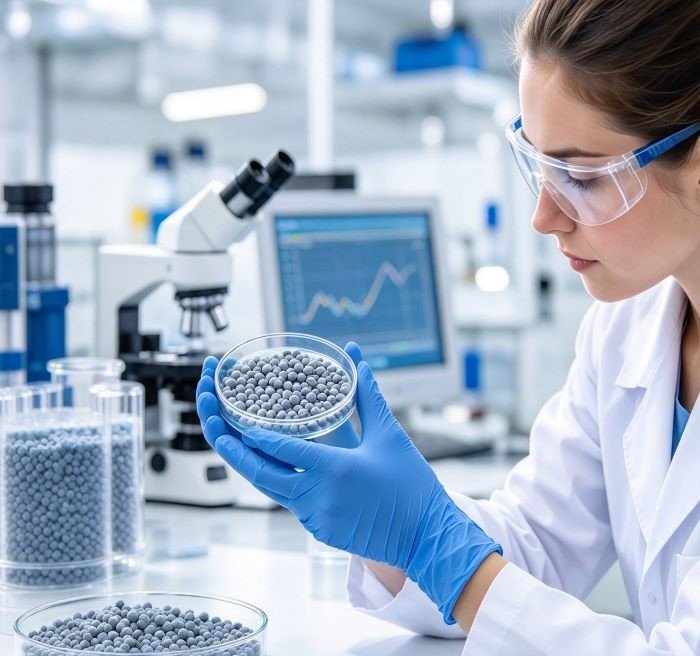
A Material-Based Approach to Hygiene Management
Silver-ion antimicrobial additives are one option for plastic applications. Under suitable conditions, silver ions can interfere with essential microbial functions, helping inhibit the growth of susceptible microorganisms.
For cold chain logistics, potential applications include:
- Reusable plastic pallets: Supporting surface hygiene management in warehouses, distribution centers, and transport operations.
- Reusable transport containers: Helping inhibit microbial growth on suitable plastic surfaces exposed to repeated handling.
- Food logistics crates: Providing an additional hygiene-related function in crates used to transport packaged or unpackaged goods, subject to the relevant application and regulatory requirements.
- Reusable storage bins and material-handling components: Extending antimicrobial functionality to selected plastic components used in logistics workflows.
The actual performance depends on the antimicrobial agent, polymer formulation, additive concentration, manufacturing process, target microorganisms, and environmental conditions.
Antimicrobial Protection Complements Cleaning
Antimicrobial additives should not be regarded as a replacement for cleaning or disinfection. Their role is to help inhibit microbial growth on treated materials, while cleaning removes soil and organic residues and disinfection reduces microorganisms through an appropriate validated process.
This distinction is particularly important in cold chain environments. Antimicrobial performance demonstrated under laboratory conditions does not automatically establish effectiveness under every combination of refrigeration, condensation, organic contamination, and repeated washing.
Manufacturers should therefore evaluate antimicrobial performance using relevant test methods and conditions that reflect the intended application. Where appropriate, testing can also examine performance after exposure to representative cleaning procedures and simulated service conditions.
For manufacturers developing functional plastic products, Langyi's antimicrobial additive solutions can be considered when evaluating material-based approaches to surface hygiene.
What Should Manufacturers Consider When Selecting Antimicrobial Additives for Cold Chain Applications?
Selecting an antimicrobial additive for reusable logistics equipment requires more than comparing antimicrobial test results. The formulation must also suit the polymer, manufacturing process, operating environment, service life, and regulatory requirements of the intended market.
Key Selection Criteria
| Selection criterion | Why it matters |
|---|---|
| Antimicrobial performance | Test data should identify the target microorganisms, test method, and conditions under which growth inhibition was demonstrated. |
| Polymer compatibility | The additive must be suitable for the intended resin, such as HDPE or PP, and the relevant manufacturing process. |
| Processing stability | The additive should tolerate the actual processing temperatures and residence times without unacceptable degradation or loss of function. |
| Durability | Performance should be assessed after representative washing, handling, abrasion, and aging conditions. |
| Mechanical properties | The formulation should maintain the strength, impact resistance, and dimensional stability required for repeated logistics use. |
| Regulatory compliance | Requirements should be assessed according to the target market, intended use, applicable product claims, and any relevant food-contact requirements. |
Matching the Additive to the Application
High-volume logistics equipment must withstand repeated loading, movement, washing, and environmental exposure. An additive that performs well in one polymer or under one laboratory condition may not deliver the same results in another formulation or application.
Manufacturers should begin by defining the target resin, processing method, required antimicrobial performance, cleaning regime, and expected service conditions. These requirements can then guide additive selection and validation.
For applications involving food or pharmaceutical logistics, the intended use must be clearly defined. Antimicrobial performance claims do not, by themselves, establish food-contact suitability, pharmaceutical compatibility, or authorization for a particular market.
Explore Langyi's silver-based antimicrobial agents to identify potential options for plastic material development. Product selection should be supported by technical data and an assessment of the specific resin, processing conditions, and end-use requirements.
Conclusion
Antimicrobial additives can help inhibit microbial growth on reusable plastic pallets and containers, complementing established cleaning and temperature-control practices across the global cold chain. Their value depends on validated performance, material compatibility, durability, and application-specific regulatory requirements.
For logistics equipment manufacturers, integrating antimicrobial functionality into plastic materials can be one component of a broader hygiene strategy. Careful formulation, application testing, and appropriate sanitation procedures remain essential to achieving reliable performance throughout the service life of reusable assets.
To discuss antimicrobial additive options for plastic pallets, containers, and other logistics materials, visit Langyi's official website to learn more about its antimicrobial additive solutions.