
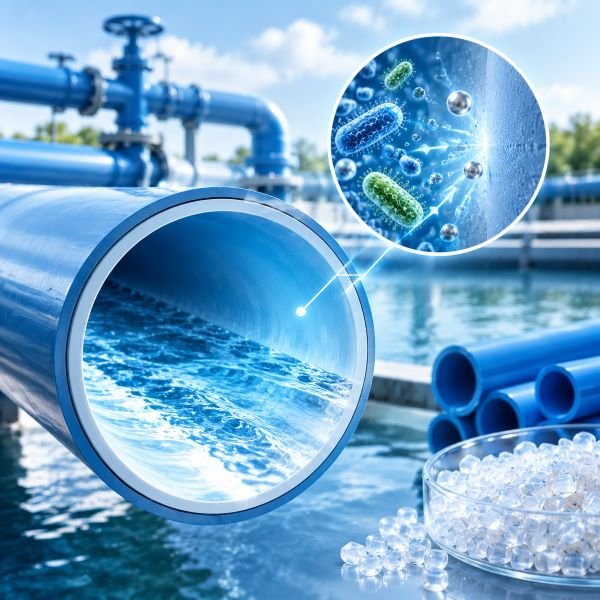
Microbial biofilms can develop inside water distribution systems, creating challenges for water quality, system maintenance, and hygiene. Antimicrobial additives may offer an additional material-based approach to managing microbial growth on suitable pipe surfaces.
Unlike post-production surface treatments, antimicrobial additives can be incorporated into selected polymer formulations during manufacturing. Depending on the active technology and application, they may help inhibit the growth of targeted microorganisms on treated surfaces. However, their effectiveness depends on formulation, exposure conditions, and validated performance data.
For drinking water applications, antimicrobial functionality must be considered alongside material safety, regulatory compliance, and hydraulic performance. Antimicrobial additives are not a substitute for effective water treatment, disinfection, or routine system maintenance. Understanding how biofilms develop—and how material-based technologies may help control microbial growth—is an important first step in evaluating their potential role.
How Does Microbial Growth and Biofilm Formation Affect Drinking Water Pipes?
Even treated drinking water can contain microorganisms that attach to pipe surfaces under suitable conditions. Once attached, some microorganisms can form biofilms: structured communities embedded in a protective matrix of extracellular polymeric substances (EPS).
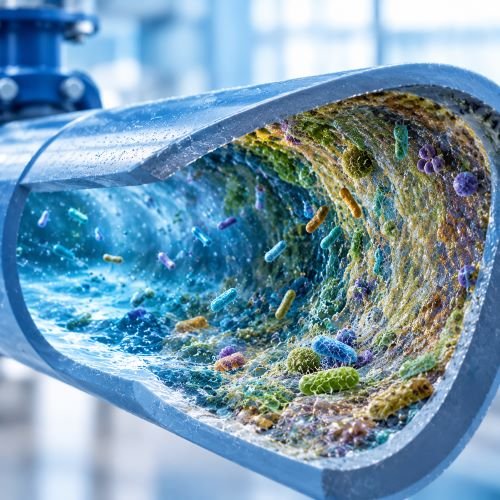
Biofilm development generally begins with microbial attachment to a surface. The attached cells may multiply and produce an EPS matrix that helps them remain attached and form a more established community. This matrix can retain nutrients and create localized conditions that influence microbial survival.
The extent of biofilm formation depends on factors such as water chemistry, temperature, nutrient availability, flow conditions, pipe material, and the effectiveness of the water treatment system.
Why Is Biofilm a Concern in Water Distribution Systems?
Biofilms are not automatically evidence that drinking water is unsafe. However, they can influence microbial ecology within a water system and create challenges for water quality management.
| Impact area | Potential issue | Practical consideration |
|---|---|---|
| Water quality | Microbial activity may contribute to changes in taste, odor, or water quality under certain conditions. | Water quality monitoring and appropriate treatment remain essential. |
| Microbial persistence | The biofilm matrix can help some microorganisms persist on surfaces and may reduce their susceptibility to certain disinfection conditions. | System design, disinfection, and maintenance need to work together. |
| Flow and maintenance | In some systems, substantial biofilm accumulation or associated deposits may contribute to fouling and increased maintenance requirements. | Pipe condition and system performance should be monitored. |
| Infrastructure performance | Microbial activity can contribute to microbiologically influenced corrosion in susceptible materials and environments. | Corrosion risk depends on the material, water chemistry, and operating conditions. |
Certain opportunistic pathogens, including Legionella species, can be associated with biofilms in some engineered water systems. The presence and risk of these organisms depend on system conditions and exposure pathways; biofilm alone does not establish that a system contains a specific pathogen.
Conventional water treatment, appropriate disinfection, temperature management where relevant, and routine maintenance remain central to controlling microbial risks. Material-based antimicrobial technologies may complement these measures when their performance and suitability have been demonstrated.
How Can Antimicrobial Additives Help Control Biofilm on Pipe and Tube Surfaces?
Antimicrobial additives can provide an additional means of managing microbial growth when incorporated into suitable polymer materials. Depending on the active ingredient and formulation, they may interfere with the growth or survival of targeted microorganisms at the treated surface.
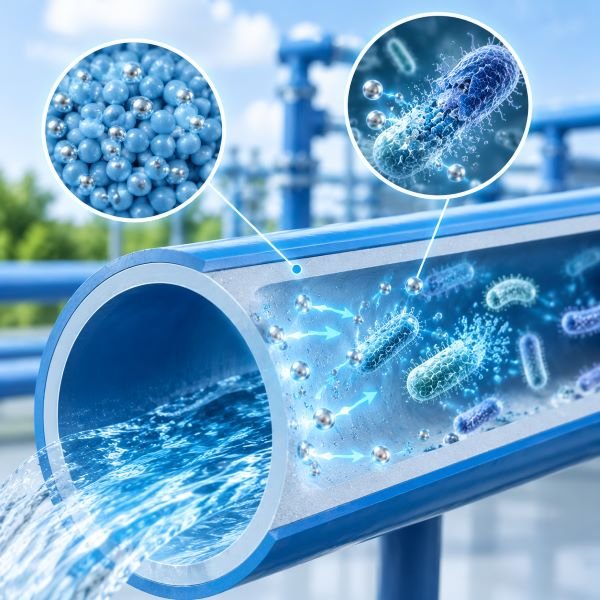
Inorganic antimicrobial technologies may use active agents based on silver or other antimicrobial substances. In silver-based systems, antimicrobial activity can involve interactions between silver ions and microbial cell envelopes, proteins, enzymes, and other cellular components.
The actual mechanism and effectiveness depend on the specific technology. An additive incorporated into a polymer does not necessarily release a consistent amount of active agent, prevent all microbial attachment, or eliminate established biofilms. Performance must be evaluated under conditions relevant to the intended application.
Built-In Antimicrobial Functionality
Incorporating an antimicrobial additive during polymer processing can introduce functionality into the finished material without relying exclusively on a separate surface treatment.
Potential advantages include:
- Material-integrated functionality: The additive is incorporated into the polymer formulation during manufacturing.
- Targeted microbial control: Suitable formulations may help inhibit the growth of specified microorganisms on treated surfaces.
- Application-specific design: Additive selection can be tailored to the polymer type, manufacturing process, and intended use.
- Complementary hygiene support: Where validated, antimicrobial materials may provide an additional measure alongside water treatment, disinfection, and maintenance.
However, the presence of an antimicrobial additive does not automatically prevent biofilm formation. Biofilms involve complex microbial communities, and their development is affected by many interacting environmental and operational factors.
Antimicrobial Additives and Biofilm Management
The potential contribution of an antimicrobial pipe material can be understood by comparing its intended role with that of an untreated material.
| Consideration | Conventional polymer surface | Polymer with a suitable antimicrobial additive |
|---|---|---|
| Microbial attachment | Microorganisms may attach under favorable conditions. | The additive may inhibit targeted microorganisms, depending on the formulation and test conditions. |
| Microbial growth | Attached microorganisms may multiply and contribute to biofilm development. | Growth of susceptible microorganisms may be reduced on the treated surface. |
| Established biofilm | Biofilm may persist if conditions support its development. | Existing biofilm should not be assumed to be removed or eliminated by the additive. |
| Hygiene management | Depends on water quality, system design, treatment, and maintenance. | Still depends on these measures, with antimicrobial functionality serving as a potential additional control. |
For manufacturers, the key question is not whether an additive can make a pipe completely resistant to biofilm, but whether it can deliver measurable, application-relevant antimicrobial performance without compromising the material or water quality.
Langyi develops inorganic antimicrobial additive solutions for selected material applications. Manufacturers evaluating potential options can learn more about Langyi's antimicrobial additive solutions and assess suitability against their specific technical and regulatory requirements.
What Should Manufacturers Consider When Selecting Antimicrobial Additives for Water Pipes?
Selecting antimicrobial additives for drinking water pipes requires more than demonstrating antimicrobial activity. The additive must be suitable for the intended polymer and manufacturing process, while the finished pipe system must meet applicable drinking water contact requirements.
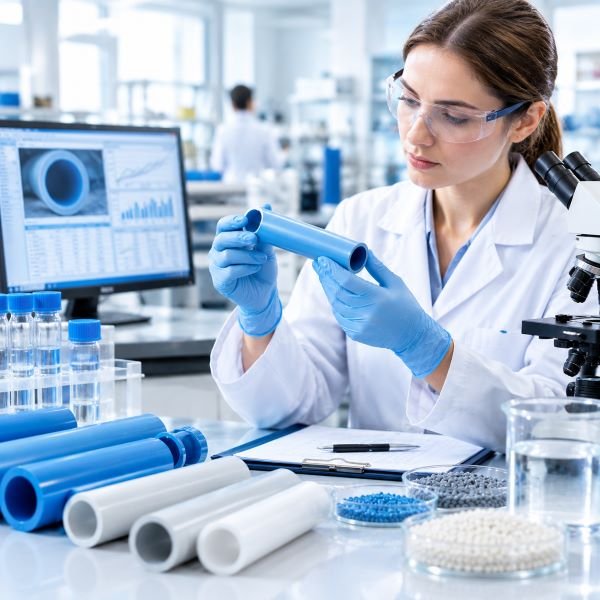
A formulation that performs well in a general antimicrobial screening test may not be suitable for potable water applications. Manufacturers should evaluate antimicrobial performance, potential migration or leaching, mechanical properties, processing stability, and regulatory compliance as separate but interconnected requirements.
Drinking Water Contact Safety and Regulatory Compliance
For products intended to contact drinking water, material safety is a primary consideration. Requirements differ by country, product type, intended use, and applicable regulatory framework.
In North America, NSF/ANSI/CAN 61 is a widely used standard for evaluating the health effects of drinking water system components. Other markets may apply different requirements, such as relevant UK water fitting requirements or German drinking water contact material assessment frameworks.
Certification or compliance must be verified for the specific product, formulation, intended use, and market. Certification of a raw additive alone should not be assumed to establish compliance of the finished pipe. The complete formulation and final product may require evaluation under the applicable scheme.
Manufacturers should also review whether antimicrobial claims trigger additional regulatory obligations. Requirements can differ between a product intended to control microbial growth on its own surface and a product marketed with claims about protecting drinking water or public health.
A Technical Checklist for Additive Selection
| Selection criterion | Key question | Why it matters |
|---|---|---|
| Drinking water contact compliance | Does the intended additive and finished pipe meet applicable requirements for the specific use and market? | Helps address material safety and regulatory obligations. |
| Polymer compatibility | Is the additive compatible with the selected polymer, such as PVC or PEX, and the complete formulation? | Helps maintain the required material properties and product quality. |
| Processing stability | Can the additive withstand the actual extrusion temperatures and processing conditions? | Helps avoid processing defects and loss of functionality. |
| Mechanical performance | Does the final pipe retain its required strength, flexibility, pressure rating, and dimensional stability? | Ensures that added functionality does not compromise critical performance. |
| Antimicrobial efficacy | Has performance been demonstrated against relevant microorganisms using an appropriate test method? | Establishes whether the additive addresses the intended microbial challenge. |
| Durability and migration | How does performance change after aging, prolonged water exposure, and other representative conditions? | Helps evaluate long-term suitability and potential release of active substances. |
Validate Performance Under Realistic Conditions
Testing should reflect the intended application as closely as practicable. Depending on the product and regulatory pathway, evaluation may include antimicrobial efficacy testing, water contact or migration assessments, mechanical testing, processing trials, and aging studies.
Test methods should be selected carefully. A method designed for evaluating antimicrobial activity on non-porous surfaces may not directly predict performance inside a continuously wetted pipe. Similarly, laboratory evidence of reduced microbial growth does not by itself demonstrate improved drinking water safety or reduced disease risk.
For potable water applications, claims should be limited to what the test results and applicable approvals support. Manufacturers should avoid assuming that an additive will prevent all biofilm formation, remove existing biofilms, or maintain unchanged performance throughout a pipe's entire service life without appropriate evidence.
Conclusion
Antimicrobial additives may help inhibit the growth of targeted microorganisms on suitable pipe and tube surfaces, offering a potential additional tool for managing microbial growth in water systems.
Their value depends on the active technology, polymer formulation, operating conditions, and demonstrated performance. For drinking water applications, material safety and regulatory compliance are just as important as antimicrobial efficacy.
The most responsible approach is to evaluate antimicrobial functionality as part of a broader water system strategy that includes appropriate treatment, monitoring, and maintenance. By combining application-specific testing with careful material selection, manufacturers can determine whether antimicrobial additives offer a practical benefit for their intended pipe products.
To explore inorganic antimicrobial additive technologies for polymer applications, visit Langyi's official website.