
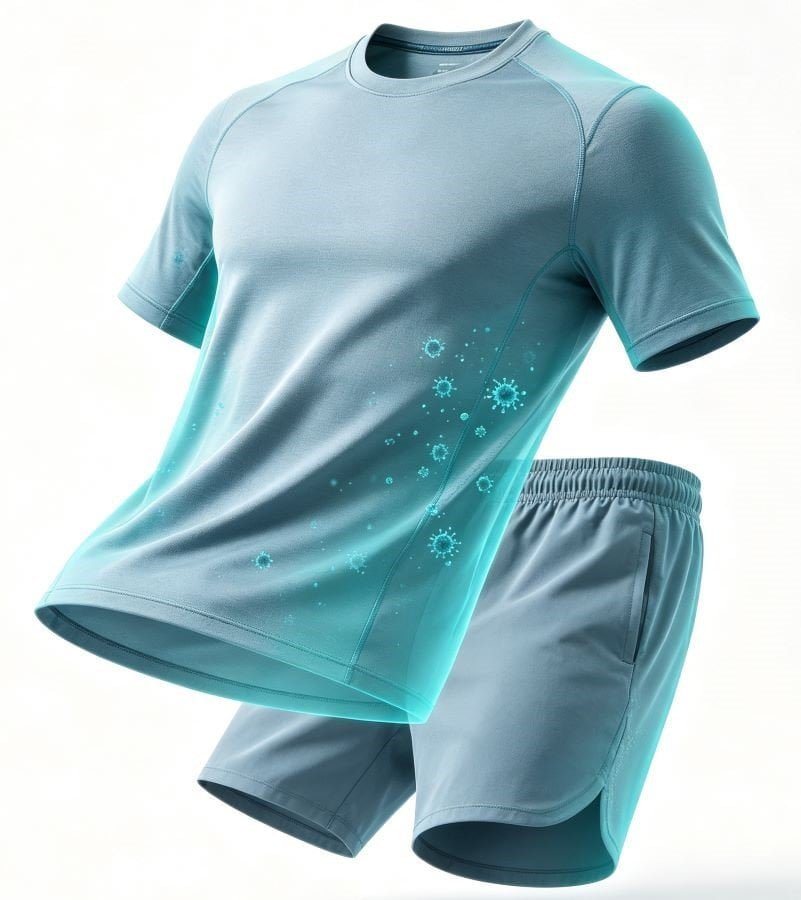
How Antimicrobial Additives Keep High-Performance Sportswear Fresher for Longer?
Your favorite workout gear can lose its freshness after only a few uses. Sweat, moisture, and microbial growth can create unpleasant odors that are difficult to remove.
Antimicrobial additives help high-performance sportswear stay fresher by reducing microbial growth on textile surfaces. They provide long-lasting odor-control performance and support better hygiene without changing the original fabric properties.
I still remember a conversation with a marathon runner who shared his frustration with expensive performance clothing. He told me, “The shirt feels great during running, but the smell returns after the next workout.” This experience is common among many athletes and sportswear users.
Many people think sweat itself is responsible for odor. However, sweat is mostly odorless when it leaves the body. The real cause is microorganisms that grow on damp fabrics and break down sweat-related compounds.
This is why I believe the future of sportswear is not only about lighter fabrics, better elasticity, or improved breathability. The next generation of sportswear needs intelligent textile solutions that deliver lasting freshness, hygiene, and performance through antimicrobial technology.
At Langyi, we focus on developing functional additive solutions that help manufacturers solve these material challenges and create higher-value products.
From Odor Challenges to Antimicrobial Protection: How Do Advanced Additives Create Fresher Sportswear?
Why do some sportswear products develop strong odors quickly, even after washing? The answer lies in the relationship between moisture, bacteria, and fabric surfaces.
Antimicrobial additives help control odor by reducing the growth of odor-causing microorganisms. When integrated into textile materials, these additives create a protective environment that helps maintain fabric freshness during repeated use.
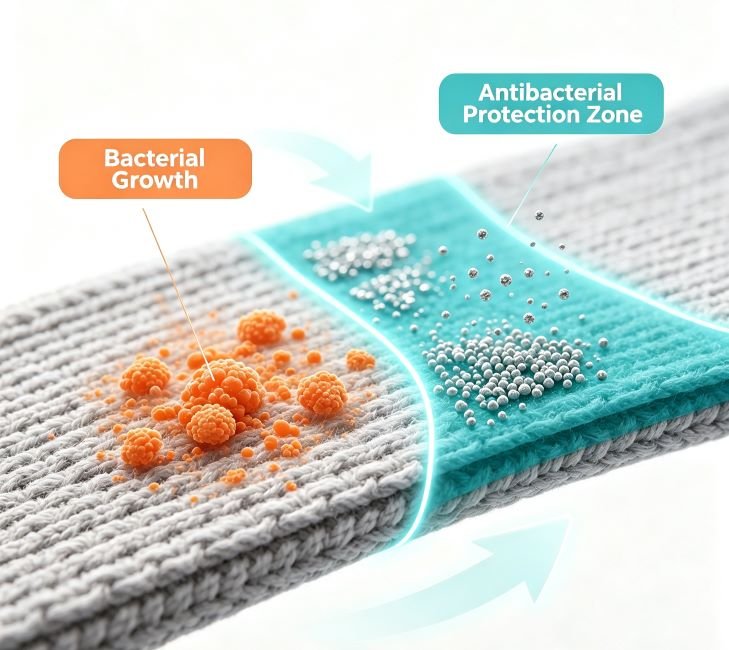
When we discuss sportswear applications with manufacturers, I often explain that odor control is not simply a cleaning problem. It is a material science challenge.
During exercise, sweat and body oils transfer onto clothing fibers. These substances provide nutrients for microorganisms already present on the skin or in the surrounding environment. As microorganisms grow, they produce compounds that create unpleasant smells.
The Science Behind Sportswear Odor
The odor process usually follows three steps:
- Sweat and moisture accumulate on textile surfaces.
- Microorganisms use organic substances as nutrients and multiply.
- Microbial activity produces odor-related compounds.
Traditional washing can remove many microorganisms, but it does not always prevent new microbial growth during future use.
This is where antimicrobial additives provide additional value.
How Do Antimicrobial Additives Work?
Antimicrobial additives are functional materials incorporated into textile systems or polymer materials during manufacturing. They help inhibit microbial growth by interacting with microbial cells.
For example, silver-based antimicrobial additives gradually release silver ions (Ag+), which can interfere with essential microbial functions, including:
- Cell membrane stability
- Protein activity
- Microbial metabolism
This multi-functional mechanism helps reduce microbial activity and supports long-lasting freshness.
| Sportswear Without Antimicrobial Additives | Sportswear With Antimicrobial Additives |
|---|---|
| Microorganisms can easily multiply on damp fabrics | Microbial growth is inhibited |
| Odor may develop quickly after exercise | Odor formation is reduced |
| Freshness depends mainly on washing | Freshness is supported during product use |
| Limited functional performance | Added hygiene protection |
For sportswear brands, antimicrobial additives provide a way to upgrade ordinary fabrics into functional textiles with additional value.
What Makes Sportswear Antimicrobial? Exploring Materials, Technologies, and Long-Lasting Odor Control Solutions?
Not all antimicrobial sportswear technologies provide the same level of performance. The key difference is how antimicrobial agents are incorporated into the material and how long the protection can last.
Sportswear becomes antimicrobial when functional antimicrobial materials are added into fibers, polymers, coatings, or textile treatments. Among these technologies, silver-based antimicrobial solutions are widely recognized for their reliable performance and broad application potential.
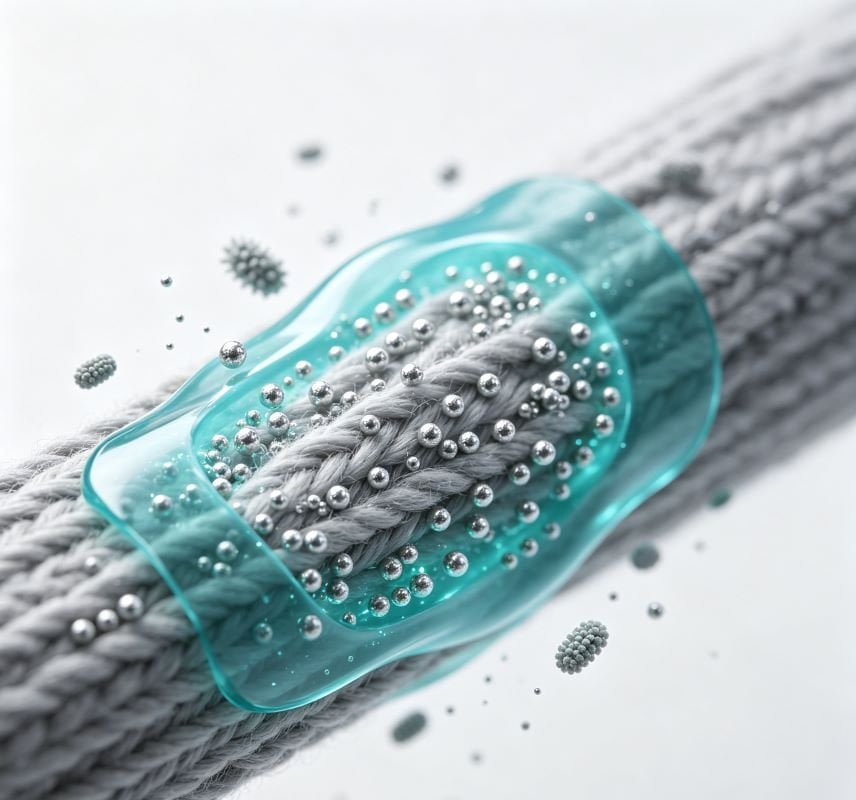
Some antimicrobial treatments only stayed on the surface of fabrics. These solutions could lose effectiveness after repeated washing.
For professional sportswear applications, manufacturers need more durable solutions. The antimicrobial function should become part of the material structure rather than a temporary surface effect.
Which Antimicrobial Technologies Are Used in Sportswear?
Different antimicrobial technologies are available depending on application requirements.
| Antimicrobial Technology | Key Characteristics | Typical Applications |
|---|---|---|
| Silver-based additives | Strong antimicrobial performance, long-term stability, broad application range | Sportswear, medical textiles, hygiene products |
| Zinc-based additives | Good antimicrobial properties with cost advantages | General functional textiles |
| Copper-based additives | Broad antimicrobial activity | Industrial and specialty textiles |
| Organic antimicrobial agents | Fast antimicrobial action | Textile finishing applications |
Among these options, silver-based antimicrobial additives are commonly selected for high-performance sportswear because they combine effectiveness, stability, and compatibility with many textile systems.
Why Is Material Integration Important?
The application method strongly affects durability.
Surface treatments can provide antimicrobial effects, but their performance may decrease after repeated washing or abrasion.
Material-integrated solutions offer another approach. By incorporating antimicrobial additives during fiber or polymer processing, manufacturers can create more stable antimicrobial performance throughout the product lifecycle.
At Langyi, we provide silver-based antimicrobial additive solutions designed for different material systems. Our team works with customers to evaluate processing conditions, compatibility, and application requirements.
Learn more about our antimicrobial additive solutions:
https://antimicrobialadditive.com/product/
How Can Silver-Based Antimicrobial Additives Improve Textile Hygiene and Sportswear Performance?
Modern consumers expect sportswear to provide more than comfort. They also want clothing that supports cleaner, healthier, and more convenient lifestyles.
Silver-based antimicrobial additives help transform traditional textiles into functional materials by providing continuous antimicrobial protection and improved odor-control performance.
At Langyi, our mission is to become a hidden champion in the functional additives industry through professionalism and material expertise. We believe advanced materials can quietly improve everyday products.
Why Are Silver-Based Additives Widely Used?
Silver has a long history of antimicrobial applications. Modern material science has improved how silver is delivered and controlled within different products.
In textile applications, silver ions can interact with microorganisms and affect their normal biological processes. This helps reduce microbial activity on fabric surfaces.
The main advantages of silver-based antimicrobial additives include:
| Advantage | Description |
|---|---|
| Long-lasting performance | Maintains antimicrobial function when properly integrated into materials |
| Broad application potential | Suitable for textiles, polymers, and other functional materials |
| Odor-control support | Helps reduce microorganisms associated with unpleasant smells |
| Material compatibility | Can be designed for different processing conditions |
Langyi’s Approach to Antimicrobial Material Solutions
Langyi was founded by Dr. Tang, a material scientist graduated from Tsinghua University. Our team focuses on providing functional additive solutions and professional technical support for global customers.
We do not only provide additives. We help customers select suitable solutions based on:
- Polymer or textile system
- Processing technology
- Target antimicrobial performance
- Final product requirements
As China’s leading functional additives manufacturer, Langyi continues to develop innovative antimicrobial technologies for international markets.
Our antimicrobial additives are designed for applications including:
- Functional textiles
- Antimicrobial plastics
- Consumer products
- Industrial materials
Explore more about Langyi antimicrobial solutions:
https://antimicrobialadditive.com/
Conclusion
Antimicrobial additives are helping sportswear evolve into smarter textiles with lasting freshness, improved hygiene, and enhanced performance.