
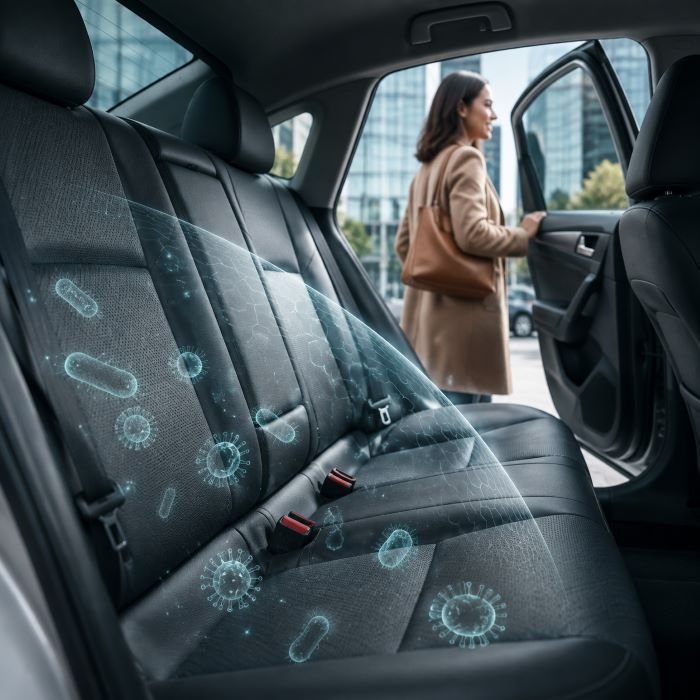
That shared car you just booked smells a bit off. It feels unclean, making your ride unpleasant.
Shared vehicles experience significantly higher usage frequency than personal cars. Multiple passengers, repeated contact, humidity, and organic residues create conditions where bacteria and mold can accumulate on interior surfaces.
Unlike traditional cleaning methods that provide only temporary improvement, antimicrobial materials are designed to provide continuous protection throughout the service life of automotive components.
Common challenges include:
| Challenge | Impact on Shared Vehicle Interiors |
|---|---|
| Frequent passenger contact | Increased microbial transfer on high-touch surfaces |
| Moisture accumulation | Creates favorable conditions for mold and bacteria growth |
| Organic residues | Contributes to odor formation and material degradation |
| Limited cleaning intervals | Makes long-lasting hygiene protection more challenging |
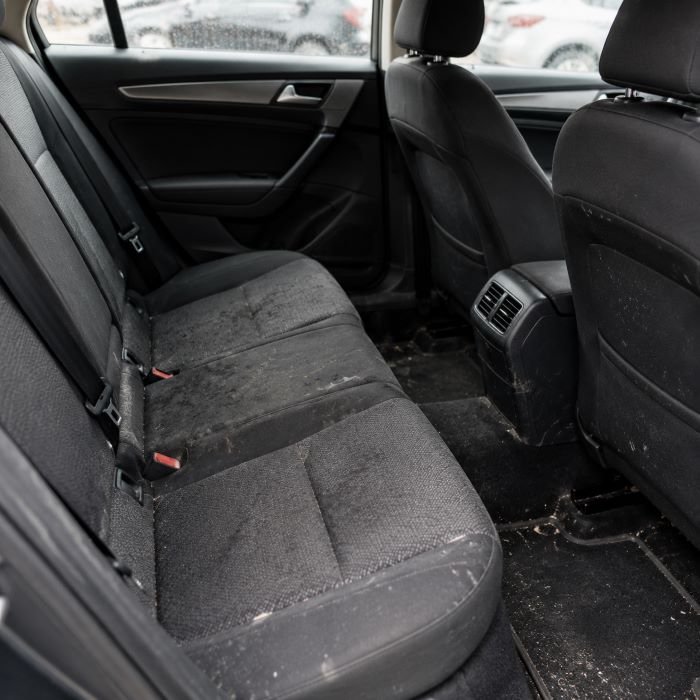
For mobility service providers, maintaining a fresh and comfortable cabin experience has become an important factor influencing passenger satisfaction.
How Can Antimicrobial Additives Help Protect Automotive Interior Materials?
Traditional cleaning focuses on removing contamination after it appears. Antimicrobial additives take a proactive approach by integrating protection directly into materials.
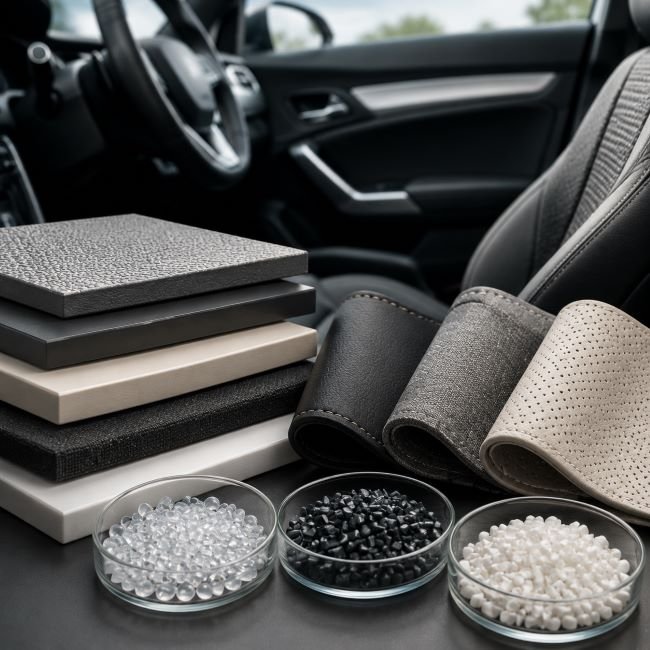
When incorporated into plastics, textiles, synthetic leather, or coatings, antimicrobial additives help inhibit microbial growth on treated surfaces and reduce odor-related issues caused by microbial activity.
How Antimicrobial Technology Works
Inorganic antimicrobial additives, such as silver ion-based solutions, work through multiple mechanisms:
- Interacting with microbial cells and affecting their activity
- Helping inhibit bacterial reproduction
- Reducing the formation of odor-causing microbial colonies
This built-in protection allows automotive components to maintain cleaner surfaces between regular cleaning cycles.
Antimicrobial Additive Solutions for Automotive Interior Materials
Shanghai Langyi Functional Materials provides inorganic antimicrobial additive solutions designed for polymer materials, textiles, coatings, and other functional applications.
The company's silver, zinc, and copper-based antimicrobial additives can be customized according to:
- Polymer compatibility
- Processing temperature requirements
- Target antimicrobial performance
- End-use application requirements
Learn more about Shanghai Langyi antimicrobial solutions:
https://antimicrobialadditive.com/product/
Where Can Antimicrobial Additives Be Applied in Automotive Interiors?
| Automotive Component | Typical Materials | Hygiene Challenges | Antimicrobial Solution |
|---|---|---|---|
| Dashboard & Door Panels | ABS, PP, PVC, TPO | Surface contamination and odor concerns | Additives incorporated during polymer processing |
| Seats & Interior Fabrics | Polyester, synthetic leather | Mold, mildew, and odor | Fiber integration or coating application |
| Steering Wheel & Touch Surfaces | PU, PVC, leather | Frequent hand contact and microbial transfer | Durable antimicrobial formulation |
| HVAC Components | Engineering plastics | Microbial accumulation and unpleasant smells | Antimicrobial polymer components |
By integrating antimicrobial functionality during material production, manufacturers can create interior components with longer-lasting hygiene performance.
How to Choose the Right Antimicrobial Additive for Automotive Interior Applications?
Selecting an antimicrobial additive requires balancing performance, durability, and material compatibility.
1. Material Compatibility
Different materials require different additive formulations. Solutions for ABS plastics, textiles, synthetic leather, and coatings should be optimized separately.
2. Processing Stability
Automotive materials often experience high-temperature processing, including extrusion and injection molding. Antimicrobial additives should maintain stability during manufacturing.
3. Safety and Regulatory Requirements
Automotive suppliers need solutions that meet regional requirements and support safe application in passenger environments.
4. Long-Term Performance
The antimicrobial function should remain effective throughout the expected service life of the component.
Shanghai Langyi works with customers to develop antimicrobial additive solutions suitable for different automotive material systems, helping manufacturers achieve reliable and durable antimicrobial performance.
As shared mobility continues to expand, vehicle hygiene expectations are increasing.
Cleaning remains important, but material design provides an additional layer of protection.
Antimicrobial additives enable automotive manufacturers and suppliers to develop interiors that are more resistant to microbial growth, odor formation, and hygiene concerns — supporting a cleaner and more comfortable passenger experience.
Explore Shanghai Langyi Antimicrobial Additive Solutions
For automotive plastics, textiles, coatings, and other functional materials, Shanghai Langyi provides customized antimicrobial additive solutions.
Product information:
https://www.antimicrobialadditive.com
Contact our technical team for application support and product recommendations.