
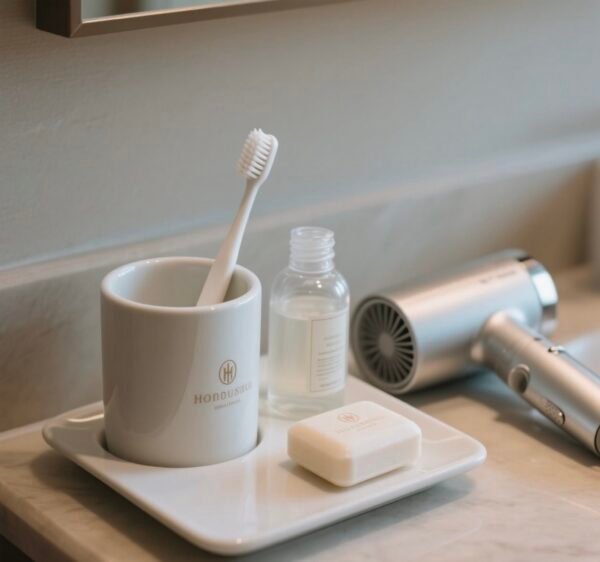
A Guest’s First Impression
After a long journey, you unlock your hotel room, roll in your suitcase, and take a deep breath. The air smells fresh, the sheets are crisp, and the interior exudes warmth and comfort. As you slide open the bathroom door, bright white towels line the shelf, a set of toiletries waits neatly by the sink, and the shower area gleams under ambient lighting.
But hidden beneath this flawless image could be an invisible threat: microbial contamination on bathroom amenities.
Why Do Hotel Bathroom Amenities Need Antimicrobial Protection?
Bathroom environments are naturally humid and warm – ideal conditions for bacterial and fungal growth. Items most vulnerable include:
- Soap dispensers
- Toothbrush holders
- Shampoo bottles
- Reusable amenity trays
- Hairdryer handles
⚠️ The Risks
- Cross-contamination between guests
Even with cleaning protocols, bacteria can remain on high-touch items, posing health risks. - Material degradation
Microbial growth causes discoloration, odors, and physical damage to plastics or composites over time. - Guest perception and reviews
A guest noticing mold in the toothbrush cup or foul odors from a soap tray damages brand reputation and ratings.
A Hotel Manager’s Dilemma
Imagine managing a 200-room hotel. Your housekeeping team cleans thoroughly, yet mold spots reappear on amenity trays within weeks. Guest complaints accumulate:
“The soap holder had a strange smell.”
“The toothbrush cup had stains at the bottom.”
Replacing these items frequently raises operational costs. Frequent bleaching degrades material surfaces. You seek a sustainable, long-lasting solution.
The Antimicrobial Solution
Silver-Based Agents
- Mode of action: Silver ions disrupt microbial cell walls and inhibit DNA replication, killing ba
- Advantages: Safe for human contact, effective at low concentrations, color-stable.
Copper-Based Agents
- Mode of action: Copper ions destroy microbial proteins through oxidative damage.
- Advantages: Strong antifungal properties, ideal for humid areas prone to mold growth.
Zinc-Based Agents
- Mode of action: Zinc interferes with microbial enzymes, preventing growth and reproduction.
- Advantages: Mild broad-spectrum protection, environmentally safe within standard concentration limits.
Integrating Antimicrobial Agents into Bathroom Amenities
How is it done?
- Material selection
Choose plastics or resins compatible with metal-based antimicrobial additives. - Masterbatch preparation
Antimicrobial agents are compounded into a masterbatch fo - Manufacturing integration
The masterbatch is blended into injection molding materials during amenity production (e.g. toothbrush holders, soap dishes). - Post-production testing
Final items undergo microbial resistance testing to ensure efficacy standards are met.
Benefits for Hotels and Guests
✅ Healthier guest experience
Reduces bacterial and mold presence on high-touch items, lowering infection or irritation risks.
✅ Reduced replacement costs
Amenities maintain cleanliness and integrity longer, minimizing frequent replacement expenses.
✅ Brand image enhancement
Promotes hotel commitment to hygiene innovation, boosting guest trust and review scores.
✅ Sustainability alignment
Longer-lasting items reduce waste, supporting green hospitality initiatives.
Case Highlight: Silver-Infused Toothbrush Holders
A luxury hotel group in Singapore faced recurring issues with bacterial film buildup inside toothbrush holders, despite daily cleaning. By switching to silver-infused polypropylene holders:
- Microbial colony counts dropped by over 95% within two hours of contact.
- Housekeeping reduced chemical cleaning frequency, saving labor and materials.
- Guest satisfaction scores for bathroom cleanliness rose significantly within three months.
Implementation Challenges and Solutions
💰 1. Cost Considerations
Metal-based antimicrobial agents increase material costs by 10-15%. However, hotels recoup these expenses through extended amenity life and reduced cleaning chemical consumption.
🛠 2. Manufacturing Adjustments
Suppliers require technical support to ensure additive dispersion does not affect product transparency or mechanical strength. Collaborating with experienced antimicrobial masterbatch providers mitigates these risks.
📜 3. Regulatory Compliance
Ensure antimicrobial additives are food-contact safe and comply with regional safety standards for consumer use items.
Final Thoughts
Bathrooms shape a guest’s perception of hotel hygiene. Integrating antimicrobial agents into bathroom amenities is a proactive investment in health protection, brand reputation, and operational sustainability.
Hotels adopting this technology not only promise cleanliness but deliver peace of mind – a subtle yet powerful advantage in hospitality excellence.
✉️ Partner With Us
We supply silver, copper, and zinc-based antimicrobial solutions optimized for hotel bathroom amenity manufacturing. Contact our team to explore formulations that keep your guests safe and your brand shining.