
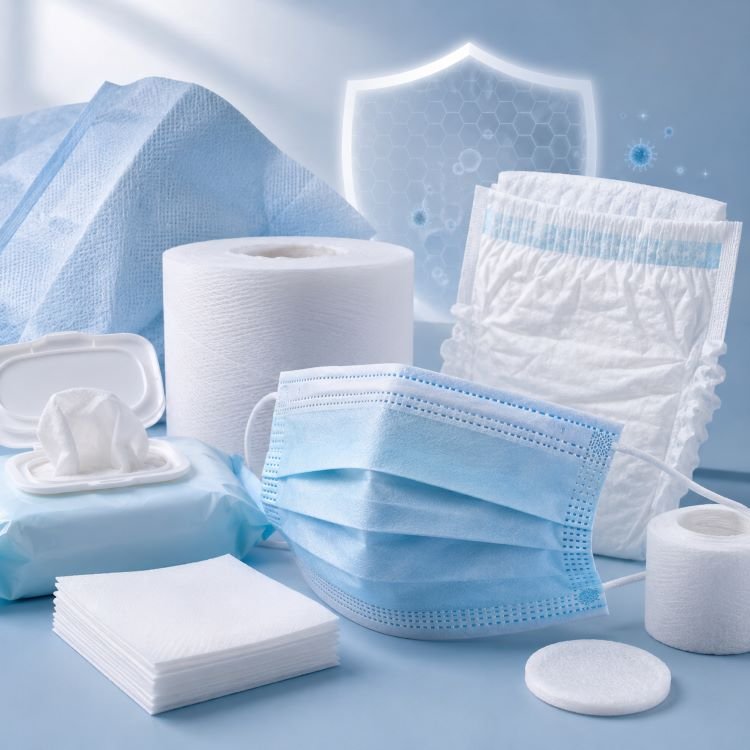
How Do Antimicrobial Additives Deliver Long-Lasting Hygiene for Masks and Hygiene Products?
Many people trust high-filtration masks and hygiene products to keep them safe. But filtration alone does not stop microbes from remaining on the material surface. Antimicrobial additives help nonwoven products stay cleaner throughout their intended service life.
Antimicrobial additives are integrated into polymer materials before nonwoven fibers are produced. They help inhibit the growth of bacteria and fungi on treated surfaces, supporting long-lasting hygiene, reducing odor caused by microbial growth, and adding value to masks and disposable hygiene products.
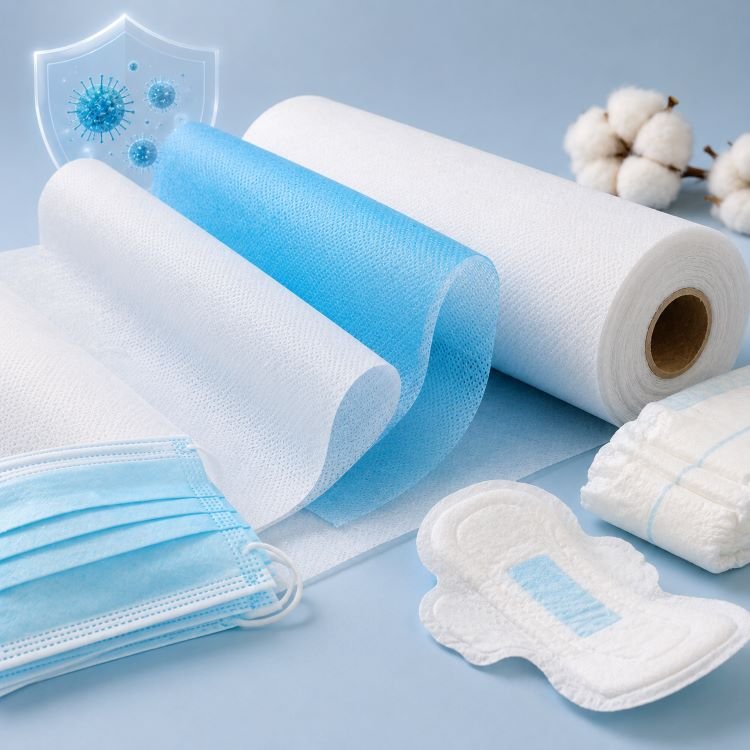
For years, I focused on filtration efficiency when discussing nonwoven materials. Then I realized many manufacturers were asking a different question: How can we keep the material itself cleaner during use? That simple question reflects a growing trend across the healthcare, hygiene, and consumer product industries. Today, manufacturers are looking beyond filtration and considering antimicrobial functionality as part of next-generation product design.
Why Is High Filtration Alone Not Enough for Long-Term Hygiene Protection?
A high filtration rate removes airborne particles. It does not actively control microbial growth on the material surface after exposure during normal use.
Filtration and antimicrobial protection solve different problems. Filtration captures particles. Antimicrobial technology helps inhibit the growth of bacteria on treated nonwoven surfaces, supporting cleaner materials throughout the product's intended life.
Many people assume that higher filtration automatically means better hygiene. In reality, filtration is only one part of the equation.
During use, nonwoven materials are exposed to moisture, warmth, and frequent handling. Under suitable conditions, microorganisms deposited on untreated surfaces may survive or multiply. While filtration performance may remain unchanged, surface hygiene becomes another important consideration, especially for products designed for prolonged wear or close skin contact.
I often compare this to a coffee filter. The filter catches coffee grounds, but it does not change what remains inside it. In the same way, a high-performance filter captures particles, but it is not designed to actively control microbial growth on the material surface. Antimicrobial additives provide an additional layer of functionality by helping keep treated surfaces cleaner.
This is why many manufacturers are moving from a filtration-only mindset toward a filtration plus antimicrobial protection strategy.
| Feature | High-Filtration Nonwoven | Antimicrobial Nonwoven |
|---|---|---|
| Primary Function | Captures airborne particles | Captures particles and supports cleaner treated surfaces |
| Surface Hygiene | Passive | Active antimicrobial functionality |
| Odor Control | Limited | Helps reduce odor caused by microbial growth |
| Product Value | Filtration performance | Filtration plus added hygiene benefits |
For manufacturers, this combination offers an opportunity to differentiate products while meeting growing consumer expectations for cleaner and more hygienic materials.
How Do Antimicrobial Nonwoven Fabrics Improve Hygiene Performance in Masks and Disposable Products?
Antimicrobial nonwoven fabrics help manufacturers add long-lasting hygiene functionality directly into polymer materials without changing normal product performance.
Unlike temporary surface treatments, antimicrobial additives are incorporated into polymer resins during manufacturing. The antimicrobial function becomes part of the fiber itself, providing durable protection throughout the product's intended service life.
As we work with manufacturers, we have noticed a clear shift in the market. Five years ago, discussions focused mainly on filtration efficiency and production costs. Today, customers are also asking about odor control, cleaner surfaces, product differentiation, sustainability, and long-term performance.
This change is happening across many industries.
Medical masks require better hygiene performance.
Baby care products demand cleaner materials.
Feminine hygiene products benefit from improved odor control.
Disposable protective apparel needs additional value beyond basic protection.
By integrating antimicrobial technology into polypropylene (PP), polyethylene (PE), polyester (PET), and other polymer systems, manufacturers can enhance product functionality without significantly changing existing production processes.
At Langyi, we specialize in functional additives for polymer materials. Our inorganic silver-based antimicrobial additives are designed for excellent thermal stability, broad polymer compatibility, and long-lasting antimicrobial performance. They can be incorporated into melt-blown, spunbond, and other nonwoven manufacturing processes while maintaining stable processing characteristics.
Our technical team works closely with customers to optimize additive selection, dosage recommendations, processing conditions, and application development based on specific product requirements.
👉 Explore our antimicrobial additive solutions:
https://antimicrobialadditive.com/product/
👉 Learn more about Langyi:
https://www.antimicrobialadditive.com/
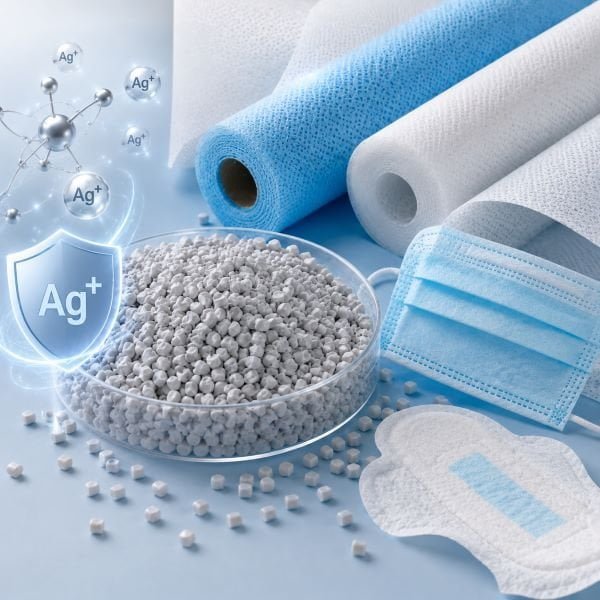
Selecting an antimicrobial additive is not simply about achieving high antimicrobial performance. The material must also process well, disperse evenly, and remain stable during manufacturing.
Some antimicrobial technologies lose effectiveness under high processing temperatures. Others may not disperse uniformly in polymer systems. These issues can affect both product quality and production efficiency.
That is why experienced material suppliers consider multiple factors during product development, including:
- Polymer compatibility (PP, PE, PET and other resins)
- Thermal stability during melt processing
- Uniform dispersion throughout the material
- Long-term antimicrobial durability
- Regulatory and application requirements
- International antimicrobial testing standards such as ISO 22196, ISO 20743, and JIS Z 2801, where applicable
Rather than offering a single universal solution, I believe the best antimicrobial additive is the one that fits the customer's material, manufacturing process, target market, and product goals.
As hygiene expectations continue to rise worldwide, antimicrobial nonwoven fabrics are becoming more than a premium feature. They are increasingly viewed as a practical way for manufacturers to create safer, higher-value products that stand out in a competitive market.
How Can You Choose the Right Antimicrobial Partner for Nonwoven Products?
Choosing the right antimicrobial supplier is as important as choosing the additive itself. Long-term success depends on technical expertise, reliable materials, and continuous application support.
When evaluating a supplier, I recommend looking beyond antimicrobial claims. Ask whether the supplier can support formulation optimization, processing guidance, performance testing, and product development from concept to commercialization.
At Langyi, our goal is not simply to supply antimicrobial additives. We work alongside manufacturers to help develop reliable functional material solutions. From polymer selection to processing recommendations and application support, we aim to shorten development cycles and help customers bring differentiated products to market more efficiently.
Whether your application involves face masks, medical protective apparel, wipes, baby care products, or other disposable hygiene products, selecting an experienced materials partner can make the difference between a product that performs in the laboratory and one that succeeds in the marketplace.
Conclusion
Filtration protects by capturing particles. Antimicrobial additives add another level of functionality by helping treated nonwoven materials stay cleaner throughout their intended service life. Together, they enable manufacturers to develop the next generation of high-performance hygiene products.
About Langyi
Langyi is China's leading functional additives manufacturer, founded by Dr. Tang, a material scientist graduated from Tsinghua University.
We specialize in functional additives for polymer materials, helping manufacturers improve product performance through professional material solutions and technical expertise. Our antimicrobial additives are widely applicable to nonwoven fabrics, plastics, coatings, and other polymer-based products that require long-lasting hygiene performance.