
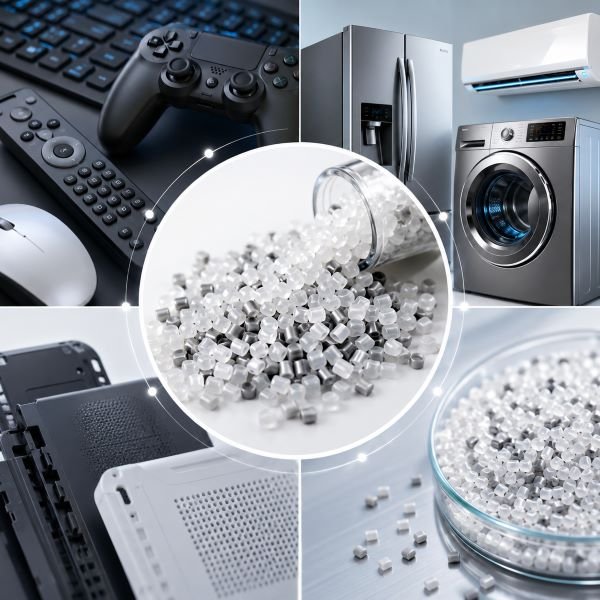
Antimicrobial Additives for Consumer Electronics & Home Appliances: Enhancing Hygiene and Product Protection
The future of consumer electronics isn't just smarter—it's built with materials that actively help keep products cleaner every day.
Your electronics are touched countless times every day. Routine cleaning removes visible dirt, but microbes can quickly return to frequently used surfaces. Manufacturers are now looking beyond cleaning by integrating antimicrobial protection directly into the materials themselves.
Antimicrobial additives are incorporated into plastics during manufacturing. They help inhibit the growth of bacteria on treated surfaces, reducing odor-causing microbial buildup and helping products maintain a cleaner appearance throughout normal use. Unlike surface coatings, the antimicrobial function becomes part of the polymer, providing long-lasting product protection without changing the product's appearance or performance.
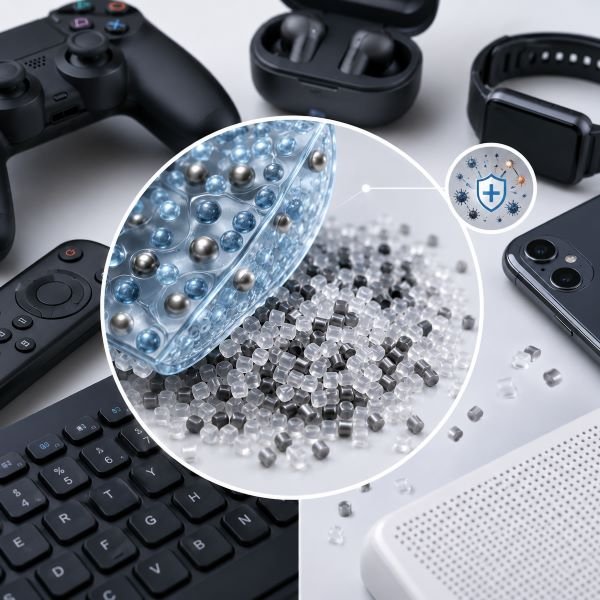
Better products begin with better materials. Consumers expect more than innovative features and attractive designs. They also want products that stay cleaner during everyday use. That is why antimicrobial materials are becoming an increasingly important consideration for designers, engineers, and manufacturers of consumer electronics and home appliances.
What Is Antimicrobial Technology and Why Is It Important for Consumer Electronics?
Cleaning electronic devices is necessary, but it only addresses contamination at a single moment. Frequently touched surfaces can quickly become contaminated again during normal use.
Antimicrobial technologyincorporates active ingredients into plastics and other materials to help inhibit the growth of bacteria on treated surfaces. It is designed to protect the product by supporting cleaner surfaces, reducing odor caused by microbial growth, and helping maintain the appearance of the material. It is not intended to replace routine cleaning or provide protection against disease.
Why are manufacturers choosing antimicrobial materials?
One question I hear quite often is:
"If consumers already clean their electronics, why add antimicrobial protection?"
The answer is simple.
Cleaning is temporary.
Material protection is continuous.
A disinfecting wipe removes contamination at one point in time. An antimicrobial additive, however, is built into the plastic during manufacturing and continues to help inhibit bacterial growth on treated surfaces between regular cleaning cycles. This allows manufacturers to improve product durability and hygiene without changing product design or manufacturing efficiency.
For products that are touched every day, this creates meaningful value.
| Standard Plastic Components | Components with Antimicrobial Additives |
|---|---|
| Depend entirely on routine cleaning | Help inhibit bacterial growth on treated surfaces between cleaning |
| Surface coatings may wear over time | Protection is integrated throughout the polymer |
| Limited product differentiation | Adds value through built-in material functionality |
| No additional hygiene feature | Supports cleaner product surfaces during normal use |
Today, antimicrobial materials are widely considered for applications such as:
- Computer keyboards
- Computer mice
- Remote controls
- Gaming controllers
- Smart speakers
- Refrigerator handles
- Washing machine control panels
- Air conditioner housings
- Coffee machines
- Water dispensers
Rather than treating hygiene as an afterthought, manufacturers are designing it into the material from the beginning.
Can Plastic Be Antimicrobial? How Antimicrobial Additives Deliver Long-Lasting Protection?
Yes. Modern plastics can be engineered to provide long-lasting antimicrobial performance by incorporating antimicrobial additives during compounding or molding.
Unlike surface coatings, antimicrobial additives are evenly dispersed throughout the polymer matrix. This allows the antimicrobial function to remain an integral part of the material throughout normal product use.
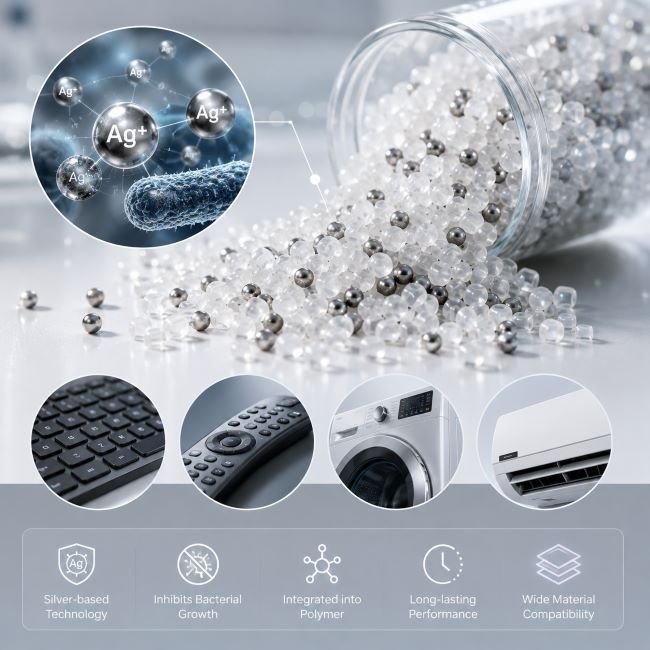
One of the biggest misconceptions I encounter is that antimicrobial protection requires an additional coating after manufacturing. In reality, many manufacturers prefer a built-in solution because it integrates seamlessly into existing production processes.
During compounding or injection molding, antimicrobial masterbatch or antimicrobial powder is blended directly with the base resin. Once molded, the additive becomes part of the plastic component itself. There is no additional coating process, no change to the product's appearance, and minimal impact on manufacturing efficiency.
This approach offers several practical advantages for OEMs and product designers:
- Long-lasting antimicrobial performance integrated into the material
- Excellent processing stability at high temperatures
- Compatibility with many engineering plastics
- Uniform dispersion throughout the polymer
- Easy implementation using existing manufacturing equipment
At Langyi, we specialize in silver-based inorganic antimicrobial additives developed for demanding polymer applications. Our solutions are compatible with a wide range of engineering plastics, including:
- ABS
- PC
- PP
- PE
- PA
- TPU
- TPE
These materials are commonly used in consumer electronics, smart home devices, household appliances, medical products, and industrial plastic components.
Whether the application is a keyboard keycap, refrigerator liner, appliance housing, or touch control panel, our antimicrobial additives can be incorporated directly into the polymer to support durable antimicrobial performance without affecting product design.
Explore Langyi's Antimicrobial Solutions
Langyi is China's leading functional additives manufacturer, dedicated to helping manufacturers improve polymer performance through material innovation.
Our silver-based antimicrobial technologies are designed for plastics, coatings, fibers, and other polymer systems where long-term antimicrobial performance is required.
Recommended Products
Silver Antimicrobial Agents
https://antimicrobialadditive.com/product/silver-ion/
Designed for engineering plastics, consumer goods, household appliances, medical devices, and industrial applications.
More Antimicrobial Solutions
https://antimicrobialadditive.com/product/
Explore our complete portfolio of antimicrobial additives, technical resources, and customized material solutions.
Our engineering team works closely with customers to recommend suitable antimicrobial formulations based on resin type, processing conditions, regulatory requirements, and target applications.
Conclusion
Tomorrow's consumer electronics will be defined not only by smarter technology, but also by smarter materials. By integrating antimicrobial additives directly into polymers, manufacturers can create products that stay cleaner, maintain their appearance, and deliver greater long-term value throughout everyday use.